Microsoft Releases Tuesday Patch-March 2026; Fixed 83 Flaws
Microsoft Tuesday Patch March 2026 fixes 83 Vulnerabilities Including 2 Actively Exploited Zero-Days
Continue Reading
Microsoft Tuesday Patch March 2026 fixes 83 Vulnerabilities Including 2 Actively Exploited Zero-Days
Continue Reading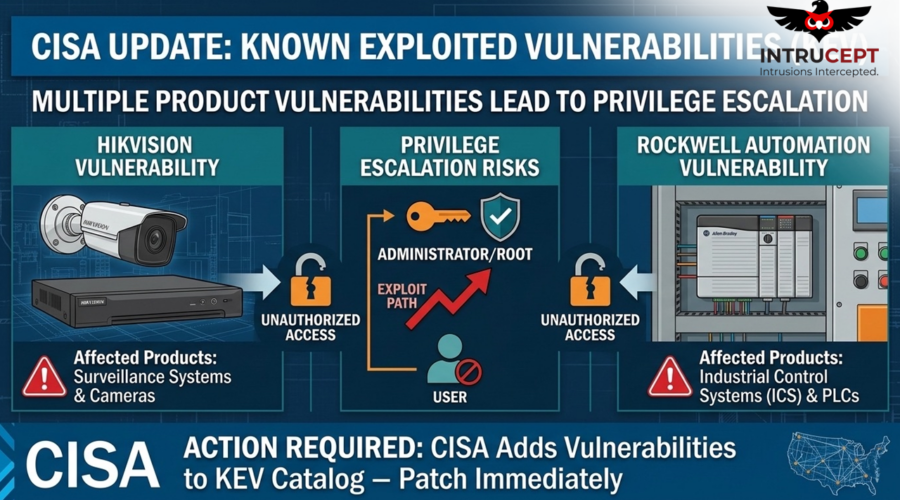
CISA emphasized the urgency of addressing these vulnerabilities
Continue Reading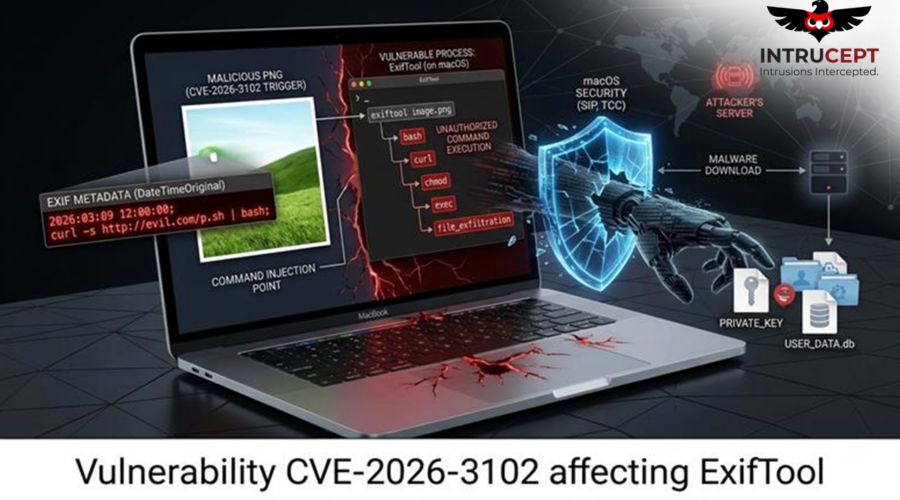
ExifTool that allows malicious image files to execute code on macOS systems discovered by Kaspersky’s Global Research and Analysis Team (GReAT) about the critical vulnerability.
Continue Reading
Cisco Released Emergency Patch
Continue Reading
Google Chrome emergency security update tracked as CVE-2026-2441; Highlights Browser Security
Continue Reading
The U.S. Cybersecurity and Infrastructure Security Agency (CISA) has added CVE-2026-25108 to its Known Exploited Vulnerabilities (KEV) catalog, that is being exploited in the wild.
Findings from CISA also confirmed about the flaw, that it affects Soliton Systems K.K. FileZen, a file transfer product. It has been included in KEV, sensing urgency for organizations still running vulnerable versions of the product.
“Soliton Systems K.K FileZen contains an OS command injection vulnerability when a user logs-in to the affected product and sends a specially crafted HTTP request,” CISA said.
Key Findings from FileZen CVE-2026-25108 vulnerability added in CISA’s KEV list
The primary reason after evaluation by threat researcher’s were –
FileZen CVE-2026-25108 is an OS command injection vulnerability. According to NVD, when the FileZen Antivirus Check Option is enabled, a logged-in user can send a specially crafted HTTP request and execute arbitrary operating system commands. In such scenario an attacker with valid access could potentially run commands on the underlying server, creating serious risk to confidentiality, integrity, and availability.
Why CISA added FileZen CVE-2026-25108 to its KEV
JVN states that if a user logs in to the affected product and sends a specially crafted HTTP request, an arbitrary OS command may be executed.
Soliton similarly says there is a possibility that a remote third party could execute arbitrary OS commands within FileZen.
The practical impact of that can be severe. Depending on server configuration and user privileges, successful exploitation could allow an attacker to:
Technical Analysis of CVE-2026-25108
OS command injection occurs when an application transmits unsafe data-such as cookies, form fields, or HTTP headers-to an operating system shell. In the case of FileZen, the vulnerability manifests during the file processing phase when the Antivirus Check Option is active. The system’s internal logic processes HTTP requests in a manner that allows an attacker to append shell commands to legitimate parameters.
Remediation & understanding why it is essential to integrate with threat intelligence monitoring platform
Organizations utilizing these versions must prioritize the transition to version 5.0.11 or later. When vendor platform Soliton indicated that simply disabling the Antivirus Check Option may reduce the immediate attack surface but does not replace the requirement for a full firmware update.
As per vendor’s suggestion a resetting of password for all users if an organization suspects a compromise. Integration with cyber threat intelligence platform will provide early warning indicators of exploitation as cyber threat intelligence platforms collect data from various sources to provide early warning indicators of exploitation.
CISA has set a deadline of March 17, 2026, for Federal Civilian Executive Branch (FCEB) agencies to remediate CVE-2026-25108. This mandate specifically applies to federal agencies, it serves as a stark reminder for private sector organizations. The inclusion in the KEV catalog implies that the vulnerability is being used in the wild, likely by state-sponsored actors or organized cybercriminal groups.
Sources; CVE-2026-25108 CISA Confirms Active Exploitation of FileZen

AI Lazed Threat Actors Compromised 600 +Fortinet FortiGate firewalls in 55 countries
Continue Reading
Microsoft 365 Copilot Vulnerability Bypasses DLP Policies, Summarizes Confidential Emails; Bug Tracked CW1226324
Summary :
A recently disclosed issue in Microsoft 365 Copilot caused the AI assistant to summarize confidential emails despite sensitivity labels and Data Loss Prevention (DLP) policies being configured.
The bug, tracked under CW1226324, allowed Copilot’s “Work Tab” chat feature to process and summarize emails from Sent Items and Draft folders, even when those emails carried confidentiality labels designed to restrict automated access.
Microsoft findings
Microsoft’s investigation revealed a code-level defect as the root cause. The flaw allows Copilot to inadvertently pick up items stored in users’ Sent Items and Draft folders, bypassing the confidentiality labels applied to those messages.
Although Microsoft categorized the issue as an advisory with potentially limited scope, the incident raises significant concerns regarding AI governance, trust boundaries, and enterprise data protection controls.
As per CSN the flaw allows Copilot to inadvertently pick up items stored in users’ Sent Items and Draft folders, ignoring the confidentiality labels applied to those messages.
Vulnerability Details
The issue happened because of an internal coding mistake in Microsoft 365 Copilot’s Work Tab chat feature. Due to this error, Copilot was able to access emails stored in Sent and Draft folders, even if they were marked as confidential.
In normal conditions, sensitivity labels and DLP policies should block automated tools from processing such emails.
However, because of this flaw, Copilot treated those protected emails as regular content and created summaries from them until Microsoft began deploying a fix in February 2026.

Attack Flow
| Step | Description |
| Configuration | Organization applies confidentiality labels and DLP policies to sensitive emails. |
| Storage | Emails are stored in Sent Items or Draft folders. |
| Trigger | User interacts with Copilot “Work Tab” Chat. |
| Processing | Due to the code bug, Copilot accesses labeled emails. |
| Exposure | Copilot generates summaries of confidential content, bypassing expected DLP enforcement. |
Source:0din
Why It’s Effective
Broader Implications
This issue shows that AI tools inside business software can sometimes ignore security rules, even when protection like DLP and sensitivity labels are properly set. It proves that AI systems can create new risk areas that traditional security controls may not fully cover.
As more companies use AI assistants in daily work, security teams must regularly test and monitor how AI handles sensitive data. AI should be treated like a powerful internal system that needs strict oversight, not just a simple productivity feature.
Remediation:
Microsoft has initiated a fixed rollout and is monitoring deployment progress. However, organizations should take proactive measures:
Conclusion:
This incident highlights that AI integrations can introduce unexpected security gaps, even in well-configured enterprise environments. Organizations cannot assume that existing security controls will automatically work the same way with AI-powered features.
As AI adoption increases, companies must strengthen AI governance, continuously validate security policies, and monitor AI behavior just like any other critical system. Proactive testing and oversight are essential to prevent future data exposure risks.
Bypassing DLP policies by AI aided assistants signals huge security gap which needs to be addressed at enterprise level as AI tool taking over enterprise security posture cannot be undermined.
References:

Microsoft’s February 2026 Patch Tuesday
Continue Reading
Fortinet released security updates for CVE-2026-2164
Fortinet has recently addressed a critical security vulnerability, identified as CVE-2026-21643, in its FortiClientEMS product. This flaw is classified as a SQL injection vulnerability, enables unauthenticated remote attackers to execute arbitrary code or system commands on affected systems by sending specially crafted HTTP requests.
Fortinet has released security updates to address a critical flaw impacting FortiClientEMS that could lead to the execution of arbitrary code on susceptible systems.
Technical Details
With a CVSS v3.1 base score of 9.1, this vulnerability is considered critical and poses a significant risk to organizations relying on FortiClientEMS for endpoint management.
The flaws affect the following versions –
The vulnerability, CVE-2026-21643, resides in the FortiClientEMS administrative web interface.
Reason for the flaw or vulnerability to appear is caused by improper neutralization of user-supplied input in SQL queries. The flaw allows an unauthenticated attacker to send specially crafted HTTP requests to the FortiClientEMS GUI.
This resulted in the execution of arbitrary SQL statements, leading to unauthorized access, data exfiltration, privilege escalation and remote code execution (RCE) on any primary system.
Remediation
Immediate patching is strongly recommended to prevent potential exploitation, as the vulnerability allows attackers to bypass authentication and gain full control over the targeted system.
There is currently no evidence of exploitation in the wild but the flaw has been termed a high-priority issue for all organizations using the affected product version, reason the attack surface is vulnerable.
Fortinet has since acknowledged that the issue has been actively exploited by bad actors to create local admin accounts for persistence, make configuration changes granting VPN access to those accounts, and exfiltrate the firewall configurations.
Conclusion:
The vulnerability is not present in FortiClientEMS versions 7.2, 8.0, or FortiEMS Cloud. The issue has been resolved in FortiClientEMS version 7.4.5 and later.
In the past similar Fortinet SQL injection and remote code execution vulnerabilities were found in Fortinet products and was targeted by cybercriminals and state-sponsored actors for financial benefits.