Security Flaw in LMDeploy Exploited in 12 hours is CVE-2026-33626
CVE-2026-33626 vulnerbility in LLMDeploy
Continue Reading

CVE-2026-33626 vulnerbility in LLMDeploy
Continue Reading
CVE-2026-34197, an Apache ActiveMQ flaw
Continue Reading
Summary: Microsoft released its April 2026 Patch Tuesday addressing 165 security vulnerabilities across Windows, Office, SharePoint, Microsoft Defender, .NET Framework, Azure, SQL Server and other components.
The April release brings in relevant update and significant accessibility improvements, display and hardware enhancements, and several quality-of-life additions across Settings and File Explorer.
The first of the two zero-days is CVE-2026-32201, a spoofing vulnerability leading to cross-site scripting (XSS) in Microsoft SharePoint Server.The issue stems from an input validation failure that lets an attacker inject malicious scripts through improperly sanisised input fields.
Elevation of privilege (EoP) vulnerabilities accounted for 57.1% of the vulnerabilities patched this month, followed by information disclosure vulnerabilities and remote code execution (RCE) vulnerabilities at 12.3% each.
| OEM | Microsoft |
| Severity | Critical |
| Date of Announcement | 2026-04-14 |
| No. of Vulnerability | 165 |
| Actively Exploited | Yes |
| Exploited in Wild | Yes |
| Advisory Version | 1.0 |
Overview
This is the second-largest Patch Tuesday release in Microsoft’s history. The update includes two zero-day vulnerabilities one actively exploited in the wild (SharePoint spoofing) and one publicly disclosed (Microsoft Defender privilege escalation linked to the BlueHammer exploit).
Here are the CVE addresses for Microsoft April 2026:
Breakdown of April 2026 Vulnerabilities
| Vulnerability Name | CVE ID | Product Affected | Severity | CVSS Score |
| Windows Internet Key Exchange (IKE) Service Extensions RCE | CVE-2026-33824 | Windows IKE Service | Critical | 9.8 |
| Windows TCP/IP Remote Code Execution (Wormable via IPv6) | CVE-2026-33827 | Windows TCP/IP Stack | Critical | 9.8 |
| Windows Active DirectoryRemote Code Execution | CVE-2026-33826 | Windows Active Directory | Critical | 9.1 |
| Remote Desktop Client Remote Code Execution | CVE-2026-32157 | Remote Desktop Client | High | 8.8 |
| Microsoft Office Remote Code Execution (Preview Pane) | CVE-2026-32190 | Microsoft Office | High | 8.4 |
| Microsoft Word Remote Code Execution (Preview Pane) | CVE-2026-33114 | Microsoft Word | High | 8.4 |
| Microsoft Word Remote Code Execution (Preview Pane) | CVE-2026-33115 | Microsoft Word | High | 8.4 |
Technical Summary
This month’s Patch Tuesday is largely driven by Elevation of Privilege vulnerabilities, which make up a significant portion of the fixes and can be leveraged by attackers after initial access to escalate privileges and move laterally.
The release also includes several critical remote code execution issues in core Windows components. Notably, vulnerabilities such as those affecting the Windows IKE service and TCP/IP stack demonstrate the risk of unauthenticated or low-interaction exploitation, particularly in network-exposed scenarios. Other issues in Office, Word, and Remote Desktop highlight continued risk from user-driven attack vectors such as malicious documents and crafted connection files.
The update also addresses zero-day vulnerabilities, including one actively exploited and another publicly disclosed prior to patching, increasing the urgency for remediation.
Key vulnerabilities in this cycle show a mix of attack paths from preview pane-based document exploitation to wormable network flaws and Active Directory-based code execution through authenticated access.
This combination of network-level and user-interaction-based risks, along with the volume of privilege escalation issues, makes this a high-priority update cycle. Organizations should prioritize testing and deployment to reduce exposure across both endpoint and infrastructure layers.
| CVE ID | System Affected | Vulnerability Details | Impact |
| CVE-2026-33824 | Windows IKE Service Extensions | Unauthenticated attacker can send crafted UDP packets to IKEv2-enabled systems (UDP 500/4500), achieving full remote code execution with no prior access required | Remote Code Execution |
| CVE-2026-32190 | Microsoft Office | Exploitation via preview pane allows execution of malicious payload without explicit user interaction beyond viewing file | Remote Code Execution |
| CVE-2026-33114 / 33115 | Microsoft Word | Malicious document processed via preview triggers RCE; commonly used in phishing delivery chains | Remote Code Execution |
| CVE-2026-32157 | Remote Desktop Client | RCE triggered when user connects using a crafted RDP file; attack surface includes lateral movement scenarios | Remote Code Execution |
| CVE-2026-33827 | Windows TCP/IP Stack | Race condition in IPv6/IPsec stack enables unauthenticated wormable RCE across enterprise networks | Remote Code Execution |
| CVE-2026-33826 | Windows Active Directory | Authenticated attacker executes code via crafted RPC calls within domain; high likelihood of privilege chaining | Remote Code Execution |
Key Affected Products and Services
April 2026 updates address vulnerabilities across:
Kernel, TCP/IP stack, Active Directory, IKE Service, BitLocker, NTFS, SMB, and Remote Desktop components are impacted, including critical RCE and privilege escalation vulnerabilities.
Word, Excel, and PowerPoint are affected by multiple remote code execution vulnerabilities, including cases exploitable through the preview pane.
SharePoint Server (2016, 2019, Subscription Edition) is impacted, including an actively exploited zero-day vulnerability requiring immediate attention.
A publicly disclosed elevation of privilege vulnerability is addressed through updates to the Antimalware Platform.
.NET and related developer components, including Visual Studio, are affected by denial of service and privilege escalation vulnerabilities.
Azure components such as Logic Apps and monitoring agents include vulnerabilities related to information disclosure and privilege escalation.
Multiple vulnerabilities affecting SQL Server components, including privilege escalation and remote code execution risks, are addressed.
Remediation:
Here are some recommendations
Conclusion:
April 2026 Patch Tuesday addresses a significant number of vulnerabilities across Windows and related Microsoft products, including an actively exploited issue, multiple critical remote code execution flaws, and a high volume of privilege escalation vulnerabilities. Given the breadth of affected components and the potential for attack chaining, organizations should prioritize timely testing and deployment of updates, especially for critical and externally exposed systems.
References:

SAP security patch day saw the release of 19 new security notes on April 14th. There is 1 update to previously released security note. The update addresses several severe flaws, including critical SQL injection, denial of service (DoS) and code injection vulnerabilities.
Vulnerability Details:
[CVE-2026-27681] SQL Injection vulnerability in SAP Business Planning and Consolidation and SAP Business Warehouse is most critical with CVSS score 9.9. This flaw may allow attackers to run arbitrary database queries, potentially compromising sensitive information and system integrity.
SAP also released a security note that addresses a high-severity missing authorization check in ERP and S/4 HANA. Tracked as CVE-2026-34256, is missing authorization check in SAP ERP and SAP S/4 HANA. With a CVSS score of 7.1, this vulnerability could enable unauthorized users to perform restricted actions in both private cloud and on‑premise deployments
Further it could be exploited to execute an ABAP program and rewrite existing eight‑character executable programs.
[CVE-2025-64775] Denial of Service Vulnerability in SAP BusinessObjects Business Intelligence Platform, the criticality is medium
[CVE-2026-34264] Information Disclosure vulnerability in SAP Human Capital Management for SAP S/4HANA, medium criticality
Key inputs:
Of the remaining security notes, 16 (15 new and 1 updated) deal with medium-severity vulnerabilities that could lead to information disclosure.
The vulnerabilities may trigger denial-of-service (DoS), XSS attacks, code injection, redirection to malicious content or code execution in the victim’s browser.
Patching:
The flaws were patched in BusinessObjects, Business Analytics, Content Management, S/4HANA, Supplier Relationship Management, NetWeaver, HANA Cockpit and HANA Database Explorer, Material Master Application and S4CORE.
The two remaining notes address low-severity code injection bugs in NetWeaver and Landscape Transformation.
Refer to
Dec 2025 Security Advisory SAP Security Patch Released, Critical RCE Fixed & DoS Vulnerabilities
Conclusion: SAP strongly recommends that the customer visits the support portal and applies patches on priority to protect their SAP landscape.
Sources: https://support.sap.com/en/my-support/knowledge-base/security-notes-news/april-2026.html
Sources: https://www.securityweek.com/sap-patches-critical-abap-vulnerability/

Emergency Patch Issued by Fortinet for FortiClient for Vulnerability
Continue Reading
CVE-2026-20160, Vulnerability in CISCO’s smart software manager may allows attackers to gain complete control over the affected system without needing authentication which is gaining prior access to exploit the system. The CVSS severity score of 9.8 out of 10, indicating its high risk level.
Authentication and access controls play a crucial role in web application and system security. What can happen?
CISCO’s Smart Software Manager Flaw
In this case the vulnerability exposure allowed unauthorized access, as attackers do not need login credentials when a hacker can execute arbitrary commands on the operating system. Further escalating by creating crafted request to the service’s API. The vulnerability impacted certain versions of the Cisco SSM On-Prem environments, particularly software releases from 9-202502 to 9-202510.
Remediation for organizations
Organizations can prevent authentication bypass through regular patching, multi-factor authentication, encryption, and strong password policies.
The vulnerability did not impact CISCO’s smart software newly released version 9-202601 includes a patch that fixes the flaw.
Cisco advises to upgrade to version 9-202601 immediately, as there are no current workarounds or temporary mitigations to block potential attacks.
For IT teams notes include devices meet the necessary memory and hardware specifications before proceeding with the update.
Key findings from CVE-2026-20160 Vulnerability
The vulnerability was discovered internally by Cisco’s Technical Assistance Center (TAC) team and they found no immediate exploitations in the wild
With the disclosure can motivate hackers to reverse-engineer the patch and search for vulnerable systems. Following Cisco’s guidelines and maintaining up-to-date security measures will be essential in mitigating risks associated and stop any kind of data breaches.
Conclusion:
Research shows that, making timely patching critical for authentication security is essential and failing to do that can lead to data breaches.
The Cisco Product Security Incident Response Team (PSIRT) validates only the affected and fixed release information that is documented in this advisory. Cisco strongly recommends that customers upgrade to the fixed software indicated in this advisory.
Sources: Cisco Smart Software Manager On-Prem Arbitrary Command Execution Vulnerability

Codex Enabled GitHub Token Theft
Continue Reading
Summary : YARA is an open-source pattern matching engine widely used by malware researchers, SOC teams, and threat intelligence platforms to identify and classify malware using detection rules. It plays a critical role in malware analysis pipelines, endpoint detection systems, and threat hunting operations.
Kamil Frankowicz discovered that a number of YARA’s functions generated memory exceptions when processing specially crafted rules or files. A remote attacker could possibly use these issues to cause YARA to crash, resulting in a denial of service.
| OEM | Virus Total / YARA Project (Tool) |
| Severity | Critical |
| CVSS Score | 9.1 |
| CVEs | CVE-2021-3402, CVE-2021-45429, CVE-2019-19648, CVE-2018-19974, 2018-19975, 2018-19976 |
| POC Available | No |
| Actively Exploited | No |
| Exploited in Wild | No |
| Advisory Version | 1.0 |
Overview
Ubuntu has released a security advisory addressing multiple vulnerabilities in YARA that could allow attackers to cause denial-of-service conditions, disclose sensitive information, or potentially execute arbitrary code when processing specially crafted files or rules.
These vulnerabilities affect Ubuntu 16.04 LTS, 18.04 LTS, and 20.04 LTS depending on the specific issue. Organizations using YARA in security monitoring systems, malware sandboxes, or automated threat detection workflows should apply the security updates immediately.
| Vulnerability Name | CVE ID | Product Affected | Severity | CVSS Score | Fixed Version |
| Mach-O Parser Overflow Read Vulnerability | CVE-2021-3402 | YARA | Critical | 9.1 | Updated Ubuntu packages |
| Mach-O File Parsing Out-of-Bounds Access | CVE-2019-19648 | YARA | High | 7.8 | Updated Ubuntu packages |
Technical Summary
The most critical vulnerability CVE-2021-3402 exists in the macho.c implementation used by YARA to parse Mach-O files.
The flaw allows specially crafted Mach-O files to trigger overflow reads, which could result in denial of service or potential information disclosure. Given its high CVSS score, this issue represents the most severe risk addressed in this advisory.
Another high-severity vulnerability CVE-2019-19648 affects the macho_parse_file() function. When parsing specially crafted Mach-O files, the function may trigger out-of-bounds memory access, potentially leading to application crashes or execution of malicious code in certain scenarios.
Because YARA is frequently integrated into malware analysis platforms and automated threat detection pipelines, successful exploitation could disrupt security monitoring operations or compromise malware analysis environments.
| CVE ID | System Affected | Vulnerability Details | Impact |
| CVE-2021-3402 | YARA (Ubuntu 20.04) | Overflow read vulnerability in Mach-O parsing implementation | DoS, potential information disclosure |
| CVE-2019-19648 | YARA (Ubuntu 20.04) | Out-of-bound memory access during Mach-O file parsing | DoS or possible code execution |
Additional Vulnerabilities
The advisory also includes several medium-severity vulnerabilities affecting YARA components.
| CVE ID | Vulnerability Details | Impact |
| CVE-2021-45429 | Buffer overflow in yr_set_configuration() when parsing crafted rules | Denial of Service |
| CVE-2018-19976 | YARA virtual machine sandbox escape | Possible code execution |
| CVE-2018-19975 | VM sandbox escape vulnerability | Possible code execution |
| CVE-2018-19974 | Virtual machine security bypass | Possible code execution |
Potential Consequences
Remediation
Upgrade affected packages immediately to the patched versions provided by Ubuntu are mentioning below-
Released patches
| Ubuntu Release | Package | Fixed Version |
| Ubuntu 20.04 LTS | libyara3 | 3.9.0-1ubuntu0.1 esm1 |
| yara | 3.9.0-1ubuntu0.1 esm1 | |
| Ubuntu 18.04 LTS | libyara3 | 3.7.1-1ubuntu2+esm1 |
| yara | 3.7.1-1ubuntu2+esm1 | |
| Ubuntu 16.04 LTS | libyara3 | 3.4.0+dfsg-2ubuntu0.1 esm1 |
| python-yara | 3.4.0+dfsg-2ubuntu0.1 esm1 | |
| python3-yara | 3.4.0+dfsg-2ubuntu0.1 esm1 | |
| yara | 3.4.0+dfsg-2ubuntu0.1 esm1 |
If immediate patching is not possible, apply the following temporary mitigations –
You can follow the recommendations below as the best practice.
Conclusion:
Multiple vulnerabilities in YARA could allow attackers to disrupt malware detection processes or compromise analysis environments. The critical vulnerability CVE-2021-3402 and high-severity vulnerability CVE-2019-19648 pose the greatest risk and should be prioritized for remediation.
Organizations using YARA in SOC operations, malware analysis pipelines, or threat intelligence systems should apply the latest Ubuntu security updates immediately to maintain reliable threat detection capabilities.
References:
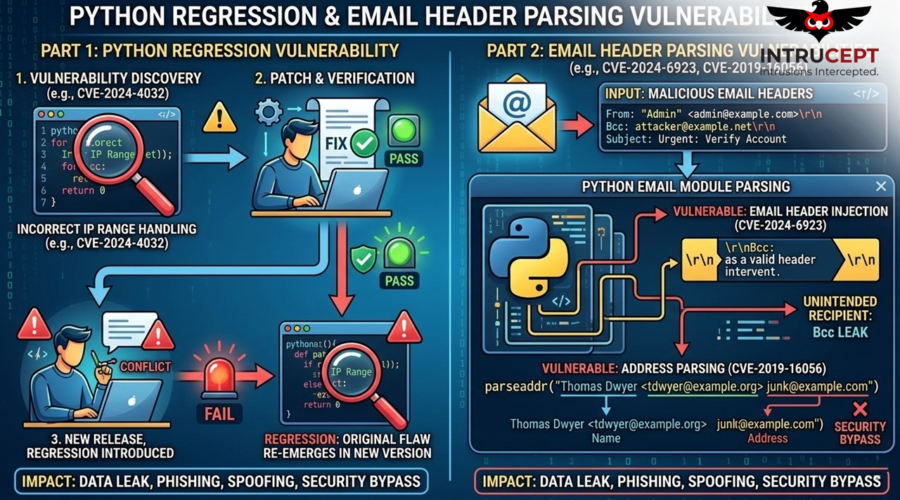
Summary: USN-8018-1 fixed vulnerabilities in python3. That update introduced regressions. The patches for CVE-2025-15366 and CVE-2025-15367 caused behavior regressions in IMAP and POP3 handling, which upstream chose to avoid by not backporting them.
| OEM | Python |
| Severity | Medium |
| CVSS Score | 6.5 |
| CVEs | CVE-2026-0865, CVE-2025-15366, CVE-2025-15367 |
| POC Available | No |
| Actively Exploited | No |
| Exploited in Wild | No |
| Advisory Version | 1.0 |
Overview
Python is a widely used high-level programming language that powers many enterprise applications, automation frameworks, DevOps pipelines, web platforms and email-processing services. Many Linux distributions – Ubuntu provide Python runtime packages as core system components.
Ubuntu released USN-8018-2 to address regressions introduced in the previous security update USN-8018-1. The earlier update attempted to fix vulnerabilities related to email header parsing and input validation but unintentionally introduced compatibility issues affecting IMAP, POP3, and WSGI header processing.
The new advisory prioritizes the fix for CVE-2026-0865, while also addressing issues related to CVE-2025-15366 and CVE-2025-15367.
| Vulnerability Name | CVE ID | Product Affected | Severity | CVSS Score | Fixed Version |
| WSGI Header Parsing Regression Vulnerability | CVE-2026-0865 | Python | Medium | 6.5 | Updated Python packages |
| Email Header Injection Vulnerability | CVE-2025-15366 | Python | Medium | 5.9 | Updated Python packages |
| Improper Email Header Parsing Vulnerability | CVE-2025-15367 | Python | Medium | 5.9 | Updated Python packages |
Technical Summary
These vulnerabilities affect multiple Python versions distributed within Ubuntu systems.
The original security update introduced patches intended to address email header parsing vulnerabilities. However, those fixes resulted in unintended behavioural regressions.
The CVE-2026-0865 patch incorrectly rejected horizontal tab characters in WSGI headers, potentially causing web applications relying on Python frameworks to malfunction.
Additionally, patches for CVE-2025-15366 and CVE-2025-15367 affected IMAP and POP3 email processing behavior, which allow upstream developers to avoid backporting those changes due to compatibility concerns.
Ubuntu released updated packages to resolve these regressions while maintaining protection against the underlying vulnerabilities.
| CVE ID | System Affected | Vulnerability Details | Impact |
| CVE-2026-0865 | Python (multiple Ubuntu packages) | Incorrect rejection of horizontal tabs in WSGI headers after patch | Web application compatibility issues |
| CVE-2025-15366 | Python email parsing library | Improper parsing allowing email header injection | Email spoofing or message manipulation |
| CVE-2025-15367 | Python email processing modules | Improper validation of message headers | Header manipulation in email processing |
Affected Packages
The following Python packages are affected –
python3.4 python3.5 python3.6 python3.7 python3.8
python3.10 python3.12 python3.13 python3.14
Remediation:
Apply the latest Ubuntu security updates immediately-
Fixed Package Versions
| Ubuntu Release | Fixed Package Version |
| Ubuntu 25.10 | python3.13 – 3.13.7-1ubuntu0.4 / python3.14 – 3.14.0-1ubuntu0.3 |
| Ubuntu 24.04 LTS | python3.12 – 3.12.3-1ubuntu0.12 |
| Ubuntu 22.04 LTS | python3.10 – 3.10.12-1 22.04.15 |
| Ubuntu 20.04 LTS | python3.8 – 3.8.10-0ubuntu1 20.04.18 |
| Ubuntu 18.04 LTS | Updated ESM packages |
| Ubuntu 16.04 LTS | Updated ESM packages |
| Ubuntu 14.04 LTS | Updated ESM packages |
If immediate patching is not possible, apply the following temporary mitigations-
You can follow the recommendations below as a best practice-
Conclusion:
The vulnerabilities addressed in USN-8018-2 highlight the risks associated with improper email header parsing and regression issues in widely used programming libraries such as Python. The primary concern, CVE-2026-0865, affects WSGI header handling and could disrupt web applications, while CVE-2025-15366 and CVE-2025-15367 relate to email header parsing weaknesses.
Organizations using Python-based applications or email processing services should prioritize updating affected Ubuntu packages to ensure both security and application stability.
References:
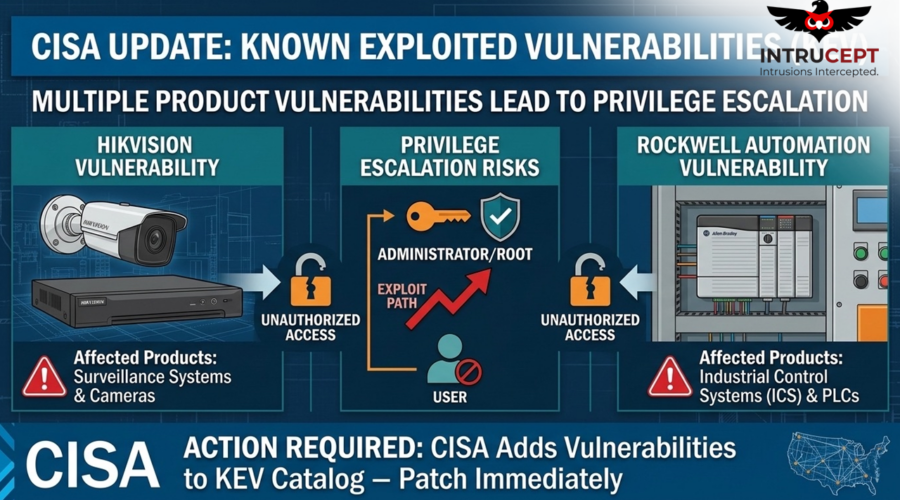
CISA emphasized the urgency of addressing these vulnerabilities
Continue Reading