GitHub’s Repositories Targeted by TeamPCP
securing Git repositories is no longer optional, it’s essential.
Continue Reading

securing Git repositories is no longer optional, it’s essential.
Continue Reading
Google Threat Intelligence Group (GTIG) has tracked and found how attackers have models pose as security researchers or firmware experts to perform analyses on embedded systems and protocols. The zeroday exploit set to target popular open-source web administration tool, generated using AI. Observations revealed hackers are deploying agentic tools to partially automate research and exploit validation.
This shifts AI from a passive assistant to a system that independently executes parts of offensive workflows.
Theis report provide insights derived from Mandiant incident response engagements, Gemini and GTIG’s proactive research. The highlights aim at the threat environment where AI serves dual purpose. On one hand to disrupt advance cyber threats from hackers and other AI tools acting as high value agents for cyber attacks.
Here are key highlights of the threat research:
Vulnerability Discovery and Exploit Generation: For the first time, GTIG has identified a threat actor using a zero-day exploit that we believe was developed with AI. The criminal threat actor planned to use it in a mass exploitation event but our proactive counter discovery may have prevented its use.
AI-Augmented Development for Defense Evasion: AI-driven coding has accelerated the development of infrastructure suites and polymorphic malware by adversaries. These AI-enabled development cycles facilitate defense evasion by enabling the creation of obfuscation networks and the integration of AI-generated decoy logic in malware that google have linked to suspected Russia-nexus threat actors.
Autonomous Malware Operations: AI-enabled malware, such as PROMPTSPY, signal a shift toward autonomous attack orchestration, where models interpret system states to dynamically generate commands and manipulate victim environments. Analysis of this malware revealed previously unreported capabilities and use cases for its integration with AI.
AI-Augmented Research and IO: Adversaries continue to leverage AI as a high speed research assistant for attack lifecycle support, while shifting toward agentic workflows to operationalize autonomous attack frameworks.
Obfuscated LLM Access: Threat actors now pursue anonymized, premium tier access to models through professionalized middleware and automated registration pipelines to illicitly bypass usage limits. This infrastructure enables large scale misuse of services while subsidizing operations through trial abuse and programmatic account cycling.
Supply Chain Attacks: Adversaries like “TeamPCP” (aka UNC6780) have begun targeting AI environments and software dependencies as an initial access vector. These supply chain attacks result in multiple types of machine learning (ML)-focused risks outlined in the Secure AI Framework (SAIF) taxonomy, namely Insecure Integrated Component (IIC) and Rogue Actions (RA).
Hackers leveraging AI for vulnerability development and Zeroday exploitation
Cybercriminal groups are increasingly leveraging AI to support vulnerability discovery and exploit development.
Google Researchers observed threat actors planning large-scale exploitation campaigns using AI-assisted techniques.
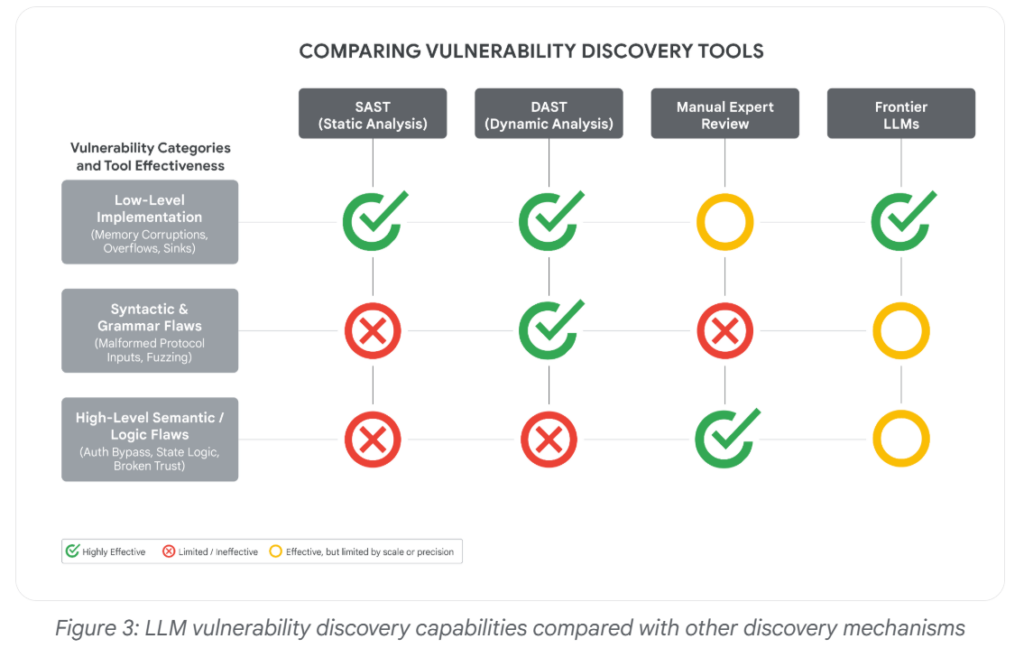
A zero-day vulnerability was identified in a Python script capable of bypassing Two-Factor Authentication (2FA) in a popular open-source web administration tool. The exploit required valid user credentials but bypassed 2FA due to a hardcoded trust assumption within the application logic. Analysis suggests the vulnerability discovery and exploit development were likely assisted by an AI model due to:
Unlike traditional vulnerabilities such as memory corruption or input validation flaws, this issue was a high-level semantic logic flaw difficult for conventional scanners to detect. Frontier AI models are becoming increasingly capable of:
The incident highlights the growing risk of AI-assisted zero-day discovery and exploitation by threat actors and as AI use datasets containing historical vulnerabilities to help models better reason about security flaws.
“For the first time, GTIG has identified a threat actor using a zero-day exploit that we believe was developed with AI,” GTIG researchers say.
What can be the consequences specifically at a time when new AI models unlike Anthropic’s Mythos, which were announced last month and appear to be good at finding such holes that Anthropic shared.
Rob Joyce, the former cybersecurity director of the National Security Agency, said that it can be difficult to know whether a human or machine wrote computer code, adding that, “A.I.-authored code does not announce itself.”
The Zeroday Defect
The report’s main findings involves a zero-day exploit that GTIG assessed was likely developed with AI assistance.
The vulnerability affected a popular open-source, web-based system administration tool and allowed two-factor authentication to be bypassed, although valid user credentials were still required.
The zero-day flaw was detected by the Google Threat Intelligence Group within the past few months and was exploited by “prominent cybercrime threat actors” in a script of the Python programming language.
Allow hackers to bypass two-factor authentication on “a popular open-source, web-based system administration tool,” though the hackers also would have needed access to valid credentials like user names and passwords to be successful, the company said.
Malware Evasion Techniques via AI
Hackers are also leveraging malware evasion techniques and sandbox evasions and other tricks to stay out of sight. As defenders increasingly rely on AI to accelerate and improve threat detection, a subtle but alarming new contest has emerged between attackers and defenders.
GTIG identified several malware families or tools with LLM-enabled obfuscation features, including PROMPTFLUX, HONESTCUE, CANFAIL, and LONGSTREAM.
Here is an example:
In June 2025, a malware sample was anonymously uploaded to VirusTotal from the Netherlands. At first glance, it looked incomplete. Some parts of the code weren’t fully functional, and it printed system information that would usually be exfiltrated to an external server.
The sample contained several sandbox evasion techniques and included an embedded TOR client, but otherwise resembled a test run, a specialized component or an early-stage experiment. What stood out, however, was a string embedded in the code that appeared to be written for an AI, not a human. It was crafted with the intention of influencing automated, AI-driven analysis, not to deceive a human looking at the code.
The malware includes a hardcoded C++ string, visible in the code snippet below:
In-memory prompt injection.
Hackers can leverage these emerging AI Evasion techniques to bypass AI-powered security systems by manipulating how Large Language Models (LLMs) interpret, analyze, and classify malicious content or activity.
Conclusion: AI is significantly strengthening cybersecurity defenses.
Security teams are leveraging AI for real-time threat detection, behavioral analytics, automated incident response, vulnerability management, and proactive risk assessment. While attackers currently benefit from AI-driven automation and exploitation capabilities, defenders are expected to gain a stronger long-term advantage as AI evolves into a core component of secure software development, proactive cyber defense, and intelligent security operations.
Sources: https://cloud.google.com/blog/topics/threat-intelligence/ai-vulnerability-exploitation-initial-access
Sources: https://blog.checkpoint.com/artificial-intelligence/ai-evasion-the-next-frontier-of-malware-techniques/

Copy Fail vulnerability in Kernel Linux
Continue Reading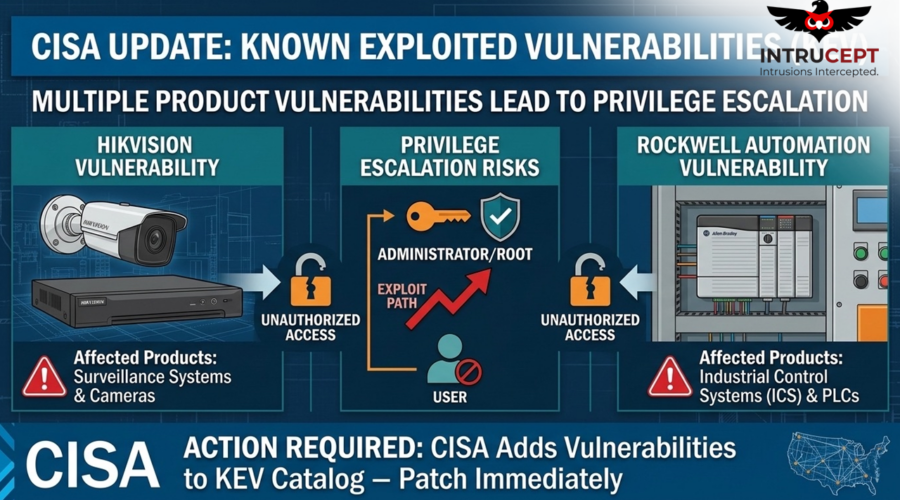
CISA emphasized the urgency of addressing these vulnerabilities
Continue Reading
LexisNexis Confirms Data Breach that leaked 2GB data
Continue Reading
Securing IoT Devices
Continue Reading
Summary
At Pwn2Own Ireland 2025, researchers Ben R. and Georgi G. from Interrupt Labs successfully exploited a zero-day vulnerability in the Samsung Galaxy S25. The flaw allowed them to gain remote control of the device, activate the camera, and track the user’s real-time location without interaction.
This achievement, earning them $50,000 and 5 Master of Pwn points, highlighted ongoing security weaknesses even in flagship smartphones with extensive testing. The exploit’s discovery underlined broader concerns about the pace of Android feature development outstripping security hardening efforts across system and multimedia libraries.
The Galaxy S25 zero-day exploit underscores the persistent threat of critical security flaws even in top-tier consumer devices. Although discovered in a controlled, ethical hacking event, such vulnerabilities pose substantial risks if leveraged by malicious actors.
Vulnerability Details
The vulnerability originated from an improper input validation issue within the Galaxy S25’s software stack. Through carefully crafted malicious inputs, the researchers bypassed Samsung’s built-in security safeguards and executed arbitrary code remotely.
The exploit provided persistent access, enabling control over cameras, GPS, and potentially other sensitive device components, effectively transforming the smartphone into a covert surveillance tool. Because the issue existed at a deep system level, it required no user interaction, making it particularly severe. The vulnerability had not been previously disclosed, meaning Samsung and the public were both unaware until the competition’s revelation.
Key characteristics:
The key characteristics of the Samsung Galaxy S25 zero-day vulnerability are as follows:
Attack Flow
| Step | Description |
| 1. Craft Malicious Input | Attackers develop specially crafted malicious inputs targeting the vulnerable components within the Samsung Galaxy S25’s software stack, particularly exploiting the improper input validation flaw. |
| 2. Deliver Payload | The malicious payload is delivered via crafted multimedia or system input, such as manipulated images or software commands, that bypass Samsung’s existing safeguards. |
| 3. Bypass Security Measures | The input validation flaw allows the malicious data to bypass security checks, executing remote code without requiring user interaction or consent, gaining initial access to the device’s system. |
| 4. Gain Persistent Control | Once the malicious code executes, attackers establish persistent control over the device, enabling continuous access to core functionalities like camera activation and GPS tracking silently and covertly. |
| 5. Exploit Device Capabilities | Attackers leverage control to activate the device’s camera and GPS in real-time, turning the device into a surveillance tool capable of capturing photos, videos, and tracking location discreetly. |
| 6. Maintain Stealth & Avoid Detection | The exploit chain is designed to evade detection by Samsung’s defenses during the attack window, allowing attackers to operate covertly without triggering security alerts or user notifications. |
| 7. Exploit and Monetize | The compromised device becomes a tool for espionage, data theft, or targeted surveillance, which can be exploited for malicious purposes or sold on criminal markets if attacker exploits are monetized. |
Proof-of-Concept
The proof-of-concept for the Samsung Galaxy S25 zero-day vulnerability (CVE-2025-21043) demonstrates how specially crafted malicious images can exploit an out-of-bounds write flaw in Samsung’s closed-source image parsing library libimagecodec.quram.so. This flaw allows remote code execution with elevated privileges without requiring user interaction.
The exploit involves delivering a malicious payload embedded in an image file that, when processed by the vulnerable library, triggers memory corruption leading to arbitrary code execution and persistent control over the device.
This has been confirmed in cybersecurity forums and independent analyses, with active exploitation observed in the wild primarily via social engineering through messaging platforms like WhatsApp. The PoC confirms that attackers can bypass conventional security mechanisms and gain deep system control, enabling surveillance actions such as camera activation and location tracking. This underscores the critical need for applying the latest security patches released by Samsung.

Source: https://x.com/thezdi/status/1981316237897396298
Why It’s Effective
Remediation:
This ensures comprehensive mitigation of vulnerability while reducing risk and exposure to active exploits.
Conclusion:
This incident reinforces the value of responsible disclosure mechanisms like Pwn2Own, where manufacturers receive detailed technical reports to develop patches before public release. Samsung has yet to issue a formal statement but is expected to roll out a security update imminently.
In the meantime, users are advised to enable automatic updates, remain cautious with app permissions and untrusted networks, and monitor official channels for patches to mitigate potential exploitation risks.
References:

Seminar Titled ‘Impact of Cyber Attacks on Maritime Sector and its Effects on National Security and International Relations’
The event in Delhi organized by Indian Navy and address cyber threat on the Maritime domain and how the threats are aligned to national security and their impact.
The event organized at a time when geo -politics is evolving and the seminar aims to deepen understanding of cyber threats in the maritime domain and foster collaboration amongst key stakeholders to enhance cybersecurity and strengthen the national cybersecurity posture.
Cyber threats evolving and looming above the maritime sector as the Maritime industry steps into the world of cyber risk. The cyber risk is vast and includes array of ransomware capable of shutting down port operations to GPS, halting steering vessels as hackers are get more creative.
Any cyberthreat on maritime sector also involves national security and is not isolated and target of cyber criminals. Maritime security involves trade, global logistics, oil and gas, defense which are major reasons to map maritime cyber threat to national security.
With an aim to deepen understanding of cyber threats in the maritime domain, the Indian Navy is organized the seminar.
The seminar, titled ‘Impact of Cyber Attacks on Maritime Sector and Its Effects on National Security and International Relations’, aims to foster collaboration among key stakeholders to enhance cybersecurity and strengthen the national cybersecurity posture.
Minister of State for IT Ministry, Jitin Prasada, deliver the keynote address during the inaugural session. The seminar will feature panel discussions each led by distinguished experts from the ministries and organizations.
The seminar aims to advance Hon’ble PM’s vision of MAHASAGAR (Mutual and Holistic Advancement for Security and Growth Across the Regions) by reinforcing a safe, secure cyberspace, and echoes the call for ‘Aatmanirbhar Bharat’ through indigenous, secure-by-design digital systems and robust public-private partnership.
Aligned with Maritime India Vision 2030 and the Amrit Kaal Vision 2047, the seminar positions cybersecurity as a core enabler of port-led growth, smart logistics, offshore energy security, and mission critical naval operations.
These include the Ministry of Ports, Shipping and Waterways, the Ministry of Petroleum and Natural Gas (MoPNG), the National Security Council Secretariat (NSCS), the Gas Authority of India Limited (GAIL), the Directorate General of Hydrocarbons (DGH), the Indian Computer Emergency Response Team (CERT-In), the National Critical Information Infrastructure Protection Centre (NCIIPC), and the National Maritime Foundation (NMF) as well as leaders from private organisations.
The topics for panel discussions are ‘Global Cyber Threats to Maritime Infrastructure,’ ‘Civil and Military Partnership,’ and ‘Maritime Sector as Critical Information Infrastructure’.

Microsoft Teams have been on top of prime targets by threat actors and this time a Cyber campaign by Storm-2372 a hacking group targeted Microsoft Teams, a platform where collaboration and meeting is most sought after while inviting for meeting and executing “device code phishing” attacks.
The cyber campaign targets governments, NGOs, IT services, defense, telecommunications, health, education, and energy sectors across Europe, North America, Africa, and the Middle East. Microsoft Threat Intelligence team has rounded up and hardened the Teams environment, with countermeasures and controls across identity, endpoints, and network layers.
“It should come as no surprise that if they can build a persona for social engineering, they will take advantage of the same resources as legitimate organizations, including custom domains and branding, especially if it can lend credibility to impersonating internal help desk, admin, or IT support,” Microsoft explains.
Prime Target of Hackers
The attack pattern reveal type of social engineering campaign, which often combines a traditional email spam campaign with Microsoft Teams-based manipulation.
The primary target of hackers is to use convincing pretexts to compromise targets through chat messaging or phone calls. But for actual compromise and initial access on Teams, hackers will need to deliver information-stealing malware, which leads to credential theft, extortion, and ransomware.
As Microsoft Team is popular it is also a carrier of Malware which are mostly information stealing. Microsoft noted the rise in email bombing (sending large volumes of emails) to create a sense of urgency.
Not one but many hacking groups have previously targeted Microsoft teams of which Russian hackers from Midnight Blizzard have been imitating security and tech support teams. The hackers urging targets to “verify their identities under the pretext of protecting their accounts by entering authentication codes.”
Microsoft noted the rise in email bombing (sending large volumes of emails) to create a sense of urgency. These emails prompt recipients to authenticate using the provided device code on Microsoft’s legitimate login page.
The threat actor targets the victim, allows him to complete authentication then intercepts the access and refresh tokens generated during the process.

(Image courtesy: Cybersecuritynews.com)
Threat Mitigation strategies:
The attackers’ intent was to convince users to download the remote monitoring and management (RMM) tool, AnyDesk, which would give them initial access to the target environment with the ultimate aim of deploying ransomware.
