
NIST Releases Two New CSF 2.0 Quick-Start Strategy
NIST will align cyber risk, risk management & workforce strategy within the framework 2.0
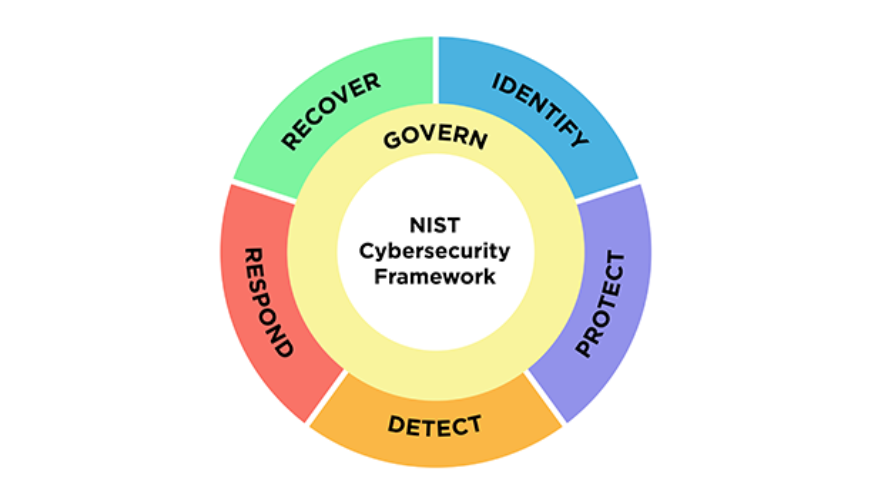
The U.S. NIST (National Institute of Standards and Technology) released two new NIST Cybersecurity Framework (CSF) 2.0 quick-start guides (QSG), adding to an expanding portfolio of implementation resources that offer tailored pathways for different audiences to engage with CSF 2.0.
- First the document positions cybersecurity risk as a core component of enterprise risk management and integrates it with workforce planning to improve how organizations assess, communicate and respond to threats.
- Second document explains what informative references are and how they support achieving the outcomes of CSF 2.0.
NIST Cybersecurity Framework 2.0: Cybersecurity, Enterprise Risk Management and Workforce Management Quick-Start Guide is based on concepts and practices from
- Enterprise risk management.
- Cybersecurity risk management
- Workforce management to help organizations improve communication about cybersecurity risks
- Plan workforce decisions
- Implement risk-informed responses.
The document is currently available and identifies that cybersecurity risks are one of many types of risk that all organizations should manage and integrate into their broader enterprise risk management (ERM) strategy.
Prioritizing Organizational cyber security posture step wise
As per the document there is a “Potential negative impacts to organizations from cybersecurity risks include higher costs, data loss, operational disruptions, lost revenue, reputational damage and reduced innovation,.
“In addition to negative risks, positive risks—where an enterprise asset may constitute an opportunity to realize a benefit or positive impact—should also be considered.
- The guide also introduces readers to NIST tools available for accessing, viewing, and using informative references for cybersecurity risk management.
- This include direct download, the CSF 2.0 Reference Tool and the Online Informative References Program.
- The draft contains two sample use cases and provides an overview of how artificial intelligence tools can support reference data use.
First step: The NIST SP 1308 identified that, as the first step to ‘Scope the Organizational Profile,’ it sets the high-level facts, assumptions, and constraints that shape the Profiles and anchor the entire effort.
Second step: The step involves appointing accountable leaders across the board, executive, cybersecurity, enterprise risk, and workforce functions while establishing a clear timeline, reviewing organizational goals. and priorities. It also requires putting change management and executive sponsorship in place to enable coordination across teams, and mapping third-party dependencies, including the capabilities of their workforce, to ensure the scope reflects the full risk landscape.
Third step: ‘Gather the information needed to prepare the Organizational Profile,’ the NIST SP 1308 said that having a clear picture of the organization’s current cybersecurity risk management, enterprise risk management and workforce context enables leadership to focus on the risks that matter most to the mission and respond with precision.
This process involves reviewing CSF Functions, Categories, and Subcategories to evaluate existing practices in the context of enterprise risk strategy, defining target outcomes aligned with priorities and budget constraints, and continuously assessing how workforce roles and capabilities support or hinder risk management objectives.
Fourth step: To ‘analyze gaps between current and target profiles and create an action plan’ takes into account an organization’s current and target cybersecurity posture in terms of outcomes aligned to the CSF Core, enabling teams to understand, tailor, assess, and prioritize cybersecurity activities based on mission objectives, stakeholder expectations, threat exposure, and regulatory requirements.
The NIST document defines an organization’s current and target cybersecurity posture in terms of outcomes aligned to the CSF Core, enabling teams to understand, tailor, assess, and prioritize cybersecurity activities based on mission objectives, stakeholder expectations, threat exposure, and regulatory requirements.
What Should Organizations’ do
Adopt NIST CSF 2.0 as a strategic framework
Align cybersecurity with enterprise risk management (ERM)
Map workforce capabilities to real threat scenarios
Improve cross-functional communication
Move beyond compliance toward operational security
The Initial Public Draft of SP 1347, NIST Cybersecurity Framework 2.0: Informative References Quick‑Start Guide, explains what informative references are and how they support achieving the outcomes of the CSF 2.0.
Source: https://www.nist.gov/news-events/news/2026/03/nist-releases-two-new-csf-20-quick-start-guides
Recent Comments