GitHub

Fake ChatGPT Desktop App used to deliver PipeMagic Malware

Microsoft finds that a fake ChatGPT Desktop App Delivering PipeMagic Backdoor,a part of sophisticated malware framework. The PipeMagic campaign represents a dangerous evolution in the global cybercrime landscape. The malicious campaign, powered by a new backdoor called PipeMagic, targets multiple industries including IT, finance, and real estate. The PipeMagic attack is centered around CVE-2025-29824, a critical Windows Common Log File System (CLFS) vulnerability

The PipeMagic campaign a malware to technical threat exploiting trust globally

As per Microsoft cybercriminals are disguising malware as widely popular ChatGPT Desktop Application to launch ransomware attacks across the globe.  

PipeMagic’s evolution from malware to technical threat exploiting trust globally

The malware allows hackers to escalate privileges once inside a system, by leveraging the immense popularity of ChatGPT, attackers have successfully weaponized user trust.

Microsoft has linked the operation to Storm-2460, a financially motivated cybercrime group known for deploying ransomware through stealthy backdoors.

PipeMagic is a malware first detected in December 2022 while investigating a malicious campaign involving RansomExx. The victims were industrial companies in Southeast Asia. To penetrate the infrastructure, the attackers exploited the CVE-2017-0144 vulnerability.

The backdoor’s loader was a trojanized version of Rufus, a utility for formatting USB drives. PipeMagic supported two modes of operation – as a full-fledged backdoor providing remote access, and as a network gateway – and enabled the execution of a wide range of commands.

Pipemagic’s technique of attack

PipeMagic also reflects a growing trend where attackers combine fileless malware techniques with modular frameworks.

By running directly in memory, it avoids detection from traditional signature-based tools. The modular design means it can expand its functionality much like commercial software — essentially transforming cybercrime into a scalable business model.

Another key point is the use of cloud infrastructure for command-and-control. By hosting their servers on Azure, the hackers blend into normal enterprise traffic, making malicious communications far less suspicious. This tactic underscores the need for behavioral monitoring instead of relying solely on blacklists.

Microsoft attributes PipeMagic to a financially motivated group known as Storm-2460. This is a warning sign for future attacks in the broader cybersecurity landscape.

PipeMagic’s modus operandi could be an inspiration for future malware families and its modular framework could fuel a wave of ransomware-as-a-service operations. That possibility raises the stakes not just for enterprises but also for small businesses and even government institutions.

The first stage of the PipeMagic infection execution begins with a malicious in-memory dropper disguised as the open-source for chat GPT application project. The threat actor uses a modified version of the GitHub project that includes malicious code to decrypt and launch an embedded payload in memory.

The embedded payload is the PipeMagic malware, a modular backdoor that communicates with its C2 server over TCP. Once active, PipeMagic receives payload modules through a named pipe and its C2 server.

The malware self-updates by storing these modules in memory using a series of doubly linked lists.

These lists serve distinct purposes for staging, execution, and communication, enabling the threat actor to interact and manage capabilities of backdoor throughout its lifecycle.

By offloading network communication and backdoor tasks to discrete modules, PipeMagic maintains a modular, stealthy, and highly extensible architecture, making detection and analysis significantly challenging.

Microsoft Threat Intelligence encountered PipeMagic as part of research on an attack chain involving the exploitation of CVE-2025-29824, an elevation of privilege vulnerability in Windows Common Log File System (CLFS).

Critical Vulnerability identified in tj-actions/branch-names’ GitHub Action workflow

Security advisory:  Patch Now! Critical Command Injection in GitHub Action tj-actions/branch-names Affects 5,000+ public repositories. 

Summary:

A critical vulnerability has been identified in the tj-actions/branch-names’ GitHub Action workflow which allows arbitrary command execution in downstream workflows. This issue arises due to inconsistent input sanitization and unescaped output, enabling malicious actors to exploit specially crafted branch names or tags.

Severity Critical 
CVSS Score 9.1 
CVEs CVE-2025-54416 
POC Available Yes 
Actively Exploited No 
Exploited in Wild No
Advisory Version 1.0 

Overview 
This issue arises due to inconsistent input sanitization and unescaped output, enabling malicious actors to exploit specially crafted branch names or tags. While internal sanitization mechanisms have been implemented, the action outputs remain vulnerable, exposing consuming workflows to significant security risks. This is fixed in version 9.0.0

The flaw allows attackers to run any command during GitHub Actions workflows by creating specially crafted branch names or tags.  

Vulnerability Name CVE ID Product Affected Severity Fixed Version 
Command Injection in branch-names GitHub Action  CVE-2025-54416   tj-actions/branch-names GitHub Action <v8.2.1 9.1  v9.0.0 or later 

Technical Summary 

This Vulnerability puts many CI/CD pipelines at serious risk, including the possibility of stealing secrets or injecting malicious code into releases.

The vulnerability exists due to unsafe usage of the eval command in the action’s script. Although some escaping was done using printf “%q”, developers later used eval printf “%s” to unescaped values, which reintroduced command injection risks.

Any branch name containing malicious shell code can trigger execution during workflows. 

The vulnerability affects GitHub Action workflows that use tj-actions/branch-names. It allows attackers to inject and execute arbitrary shell commands by creating a branch with malicious content. The issue is caused by the unsafe use of eval when handling branch names and tags in output generation. 

CVE ID System Affected  Vulnerability Details Impact 
CVE-2025-54416 GitHub repositories using tj-actions/branch-names < v8.2.1 Unsafe use of eval leads to command injection Attacker can run arbitrary commands, steal secrets, alter source code, or compromise workflows 

Proof of Concept (POC) 


Remediation

  • Update immediately to tj-actions/branch-names version v9.0.0 or higher
  • The vulnerable eval code has been replaced with safe printf usage. 
  • Review your workflows to ensure no malicious activity has occurred. 
  • Check logs for strange branch names or unexpected shell activity. 

Conclusion: 
This command injection flaw is extremely dangerous due to its simplicity and the number of projects it affects. GitHub Actions workflows that use branch names or tags from pull requests are especially at risk. Attackers don’t need access to the code just the ability to open a pull request.

All developers and security teams should act now by updating to the latest version and reviewing usage of GitHub Actions in their workflows. 

References

16 Billion Passwords Leaked in Largest Data Breach; Impact of Infostealer Malware

Data Breach with 30 exposed Datasets & contained approx 10 to 3.5 billion records making it one of the largest data breach.

According to a report security researchers from Cybernews found about a Data breach that leaked important data or passwords that was mostly generated by various cybercriminals using info stealing malware. They exposed data was made to look like a breach but these login credentials were gathered from social media, corporate platforms, VPNs etc via infostealer.

Now cybercriminals have unprecedented access to personal credentials and these credentials be used for account takeover, identity theft and targeted phishing activities.

The concern is the structure and recency of these datasets as they are not old breaches being recycled. This is fresh, weaponizable intelligence at scale”, added researchers.

The data sets contains a mix of details from stealer malware, credential stuffing sets and repackaged leaks. There is no way to compare these datasets, but likely to contain at least some duplicated information. This makes it hard to determine how many people were affected by the data breach.

What are Data sets & how deadly can be Infostealer as a malware?

Datasets are basically structure collection of data collected over the years or so and organized as case specific models

In 2024 datasets containing billions of passwords have previously found their way on the internet. Last year, researchers came across what they called the Mother of All Breaches, which contained more than 26 billion records.

The data breach that happened had data in sets, following a particular pattern, containing an URL followed by a username and password. To those unaware, this is exactly how infostealing malware collects information and sends it to threat actors.

The exposed data came from platforms widely used round the world starting from Google, Apple, Github, Telegram & Facebook. So data was first collected over a period of time, further made into data sets and grouped together.

Info stealers are malware programs that are designed to silently steal usernames and passwords Basically designed to swipe of credentials from people’s devices and send them to threat actors for further them for sale on dark web forums.

An infostealer is malware that attempts to steal credentials, cryptocurrency wallets, and other data from an infected device. Over the years, infostealers have become a massive problem, leading to breaches worldwide. No device is spare from infostealer’s impact including Windows and Macs, and when executed, will gather all the credentials it can find stored on a device and save them in what is called a “log.”

If a organization or individual is infected with an infostealer and have hundreds of credentials saved in their browser, the infostealer will steal them all and store them in the log. These logs are then uploaded to the threat actor, where the credentials can be used for further attacks or sold on cybercrime marketplaces.

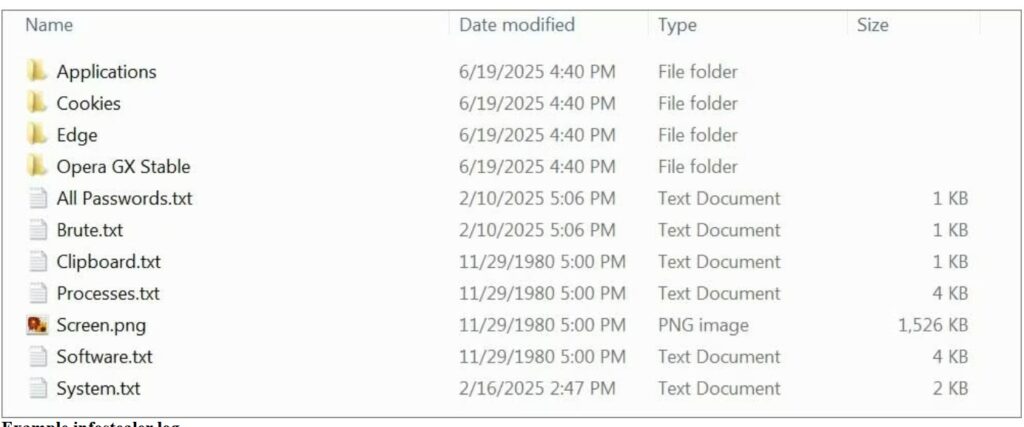
An infostealer log is generally an archive containing numerous text files and other stolen data.

Fig1:

(Image courtesy: Bleeping computers)

A devastating data breach is a nightmare for customers and affected organizations, but breaches can have a positive side also. Each incident is a learning opportunity. It’s easier to defend critical data when we understand the mistakes made by others and the tactics used by attackers.

How to be secure & keep your Data safe

If users are in midst of data breach or may find that their data is not safe as an infostealer might be there in your systems or devices then scan your device with an antivirus program. Once done then change password or your newly entered credentials could be stolen again. The system is clean so password hygiene can be maintained time to time.

At times even unique passwords won’t help you stay protected if you are hacked, fall for a phishing attack, or install malware. Its better not to change all credentials in one go instead having a cyber security hygiene in routine is better as an option.

Intru360

For organizations to stop and detect any intrusion by attackers prefer to have Intru360 in your list of cyber security go to products from Intruceptlabs.

Intru360 gives security analysts and SOC managers a clear view across the organization, helping them fully understand the extent and context of an attack. It also simplifies workflows by automatically handling alerts, allowing for faster detection of both known and unknown threats.

Globally every year cyberattacks are growing and mutating each month. Organizations have their Intelligent intrusion network detection systems in place analyze and detect anomalous traffic to face these threats.

Do visit our website for more information.

Source: https://www-bleepingcomputer-com.cdn.ampproject.org/c/s/www.bleepingcomputer.com/news/security/no-the-16-billion-credentials-leak-is-not-a-new-data-breach/amp/

Phishing Crusade Targeted approx 12,000 GitHub Repositories; Victims directed to “gitsecurityapp”

A large-scale phishing campaign has targeted nearly 12,000 GitHub repositories with phony security alerts, reported BleepingComputers.

The alerts, opened as issues on the repositories, inform users of unauthorized login attempts and provide links to change their passwords, review active sessions, or set up MFA.

If a user clicks any of these links, they’ll be taken to a GitHub authorization page for an OAuth app that will grant the attacker control of the account.

The campaign is ongoing, though GitHub appears to be responding to the attacks.

Users were directed to all links within the message to a GitHub authorization page for a malicious OAuth application called “gitsecurityapp.” If authorized, the app grants attackers full control over the user’s account and repositories, including the ability to delete repositories, modify workflows, and read or write organization data.

This consistent messaging across all affected repositories aims to create a sense of urgency and panic, prompting developers to take immediate action.

The fraudulent alert directs users to update their passwords, review active sessions, and enable two-factor authentication. However, these links lead to a GitHub authorization page for a malicious OAuth app named “gitsecurityapp.”

Upon authorization, an access token is generated and sent to various web pages hosted on onrender.com, granting the attacker full control.

(Image courtesy: Bleeping Computers)

The attack, which was first detected on March 16, remains active, though GitHub appears to be removing affected repositories.

Pointers Developers to take key inputs from this incident.

Last week, a supply chain attack on the tj-actions/changed-files GitHub Action caused malicious code to write CI/CD secrets to the workflow logs for 23,000 repositories.

If those logs had been public, then the attacker would have been able to steal the secrets.

The tj-actions developers cannot pinpoint exactly how the attackers compromised a GitHub personal access token (PAT) used by a bot to perform malicious code changes as per threat researchers.

Key pointers for User saftey:

  • For users who have mistakenly authorized the malicious OAuth app revoking access to suspicious OAuth apps through GitHub’s settings.
  • Affected users should review their repository workflows, check for unauthorized private gists, and rotate their credentials to prevent further damage.
  • This attack highlights the increasing threat of phishing campaigns targeting GitHub users.
  • As GitHub continues to investigate and respond, developers must remain vigilant and verify any security alerts before taking action.
  • Rotate your credentials and authorization tokens.

 Wiz suggests that potentially impacted projects run this GitHub query to check for references to reviewdog/action-setup@v1 in repositories.

If double-encoded base64 payloads are found in workflow logs, this should be taken as a confirmation their secrets were leaked.

Developers should immediately remove all references to affected actions across branches, delete workflow logs, and rotate any potentially exposed secrets.

(Sourece: Bleeping computers)

Advisory on MUT-8694: Threat Actors Exploiting Developer Trust in Open-Source Libraries

MUT-8694: Threat Actors Exploiting Developer Trust in Open-Source Libraries

Overview

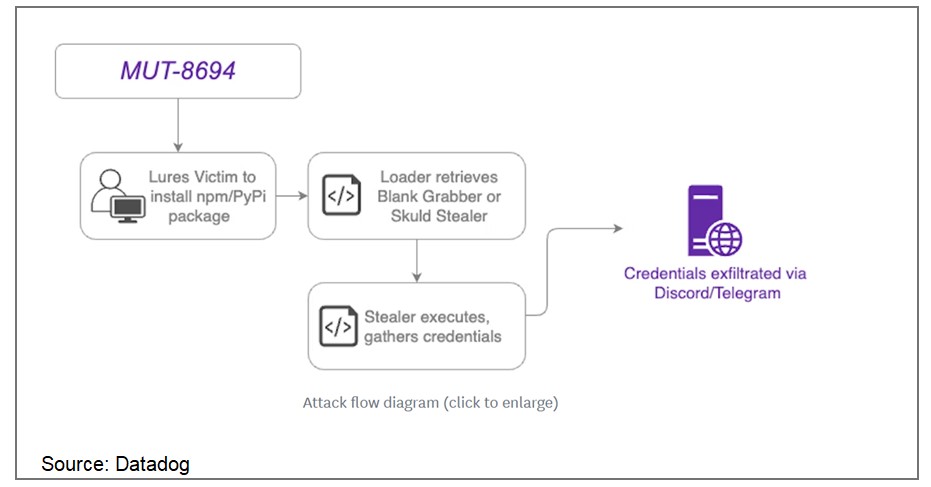
In November 2024, a supply chain attack designated as MUT-8694 was identified, targeting developers relying on npm and PyPI package repositories. This campaign exploits trust in open-source ecosystems, utilizing typosquatting to distribute malicious packages. The malware predominantly affects Windows users, delivering advanced infostealer payloads.

MUT-8694 Campaign Details

The threat actors behind MUT-8694 use malicious packages that mimic legitimate libraries to infiltrate developer environments. The campaign employs techniques such as:

  • Typosquatting: Using package names that closely resemble popular or legitimate libraries.
  • Payload Delivery: Embedded scripts download malware such as Blank Grabber and Skuld Stealer hosted on GitHub and repl.it.
  • Targeted Ecosystems: npm and PyPI, critical platforms for developers.

             Source: Datadog

Key Findings

One identified package, larpexodus (version 0.1), executed a PowerShell command to download and run a Windows PE32 binary from github[.]com/holdthaw/main/CBLines.exe. Analysis revealed the binary was an infostealer malware, Blank Grabber, compiled from an open-source project hosted on GitHub. Further inspection of the repository exposed another stealer, Skuld Stealer, indicating the involvement of multiple commodity malware samples.

Capabilities of Malware

The deployed malware variants include advanced features that allow:

  • Credential Harvesting: Exfiltrating usernames, passwords, and sensitive data.
  • Cryptocurrency Wallet Theft: Targeting and compromising crypto assets.
  • Application Data Exfiltration: Stealing configuration files from popular applications

Affected Packages

Some known malicious packages include:

  • larpexodus (PyPI): Executes a PowerShell script to download malware.
  • Impersonations of npm libraries: Host binaries leading to infostealer deployment.

Remediation:

To mitigate the risks associated with this attack, users should:

  • Audit Installed Packages: Use tools like npm audit or pip audit to identify vulnerabilities.
  • Validate Package Sources: Verify package publishers and cross-check names carefully before installation.
  • Monitor Network Activity: Look for unusual connections to GitHub or repl.it domains.
  • Use Security Tools: Implement solutions that detect malicious dependencies.

General Recommendations:

  • Avoid downloading software from unofficial or unverified sources.
  • Regularly update packages and dependencies to the latest versions.
  • Conduct periodic security awareness training for developers and IT teams.

References:

Godot Hijacked with Malware to infect Thousands of PC’s

Godot is a platform that host open source game development, where new Malware loader installed in its programming language

At least 17,000 devices were infected with infostealers and cryptojackers so far.

As per researchers cyber criminals have been building malicious code written in GDScript (Godot’s Python-like scripting language) calling on some 200 GitHub repositories and more than 220 Stargazer Ghost accounts.

Earlier hackers targeted the open sources gaming platform targeting users of the Godot Gaming Engine and researcher’s spotted that GodLoader would drop different malware to the infected devices mostly in RedLine stealer, and XMRig, a popular cryptojacker.

GodLoader, the researchers further explained, was downloaded at least 17,000 times, which is a rough estimate on the number of infected devices. However, the attack surface is much, much larger.

Check Point argues that in theory, crooks could hide malware in cheats, cracks, or modes, for different Godot-built games. Check Point detected four separate attack waves against developers and gamers between September 12 and October 3, enticing them to download infected tools and games.

Looking at the number of popular games developed with Godot, that would put the attack surface at approximately 1.2 million people.

Hackers delivered the GodLoader malware through the Stargazers Ghost Network, a malware Distribution-as-a-Service (DaaS) that masks its activities using seemingly legitimate GitHub repositories.

Technical Details

Godot does not register a file handler for “.pck” files. This means that a malicious actor always has to ship the Godot runtime together with a .pck file. The user will always have to unpack the runtime together with the .pck to the same location and then execute the runtime.

There is no way for a malicious actor to create a “one click exploit”, barring other OS-level vulnerabilities. If such an OS-level vulnerability were used then Godot would not be a particularly attractive option due to the size of the runtime.

Scroll to top