Security Advisory

Linux Local Privilege Escalation via udisksd and libblockdev (CVE-2025-6019) PoC released 

Summary : A local privilege escalation vulnerability poc has been released, tracked as CVE-2025-6019, discovered in the udisksd daemon and its backend libblockdev library, affecting widely used Linux distributions including Fedora and SUSE.

Severity High 
CVSS Score 7.0 
CVEs CVE-2025-6019 
POC Available Yes 
Actively Exploited No 
Exploited in Wild No 
Advisory Version 1.0 

Overview 

CVE-2025-6019 is a local privilege escalation (LPE) vulnerability affecting systems where: 

  • udisksd is installed and running (e.g., Fedora, SUSE) 
  • Users in the allow active group are trusted to execute disk-related actions 
  • libblockdev fails to validate privileged backend operations under unprivileged contexts 

This flaw allows unprivileged users in the “allow_active” group to escalate privileges and execute commands as root by exploiting insecure trust boundaries in D-Bus IPC communication. 

Vulnerability Name CVE ID Product Affected Severity 
​Local Privilege Escalation Vulnerability  CVE-2025-6019 udisksd / libblockdev  High 

Technical Summary 

This vulnerability is triggered when an attacker in the “allow_active” group issues a crafted D-Bus request to the udisksd daemon using tools like udisksctl. Because the daemon improperly relies on group membership alone (without UID validation), it mistakenly grants root-level mount permissions. 

An attacker can exploit this by  

  • Crafting a malicious disk image (like XFS with a SUID-root shell). 
  • Using “udisksctl mount -b /dev/loop0” to mount it as root. 
  • Escalating privileges and compromising the system. 
CVE ID System Affected  Vulnerability Details Impact 
CVE-2025-6019 Fedora, SUSE, and other Linux distros using udisks2/libblockdev Improper user validation in D-Bus authorization allows unprivileged users to perform privileged disk operations.  Local privilege escalation to root 

Remediation

Here are the recommendations below 

  • Update “udisks2” and “libblockdev” to the latest versions provided by your distribution. 
  • Audit and restrict membership of the “allow_active” group. 
  • Disable unsafe or legacy D-Bus actions in system services where possible. 

Conclusion: 
CVE-2025-6019 highlights a breakdown in privilege boundary enforcement within a core system component used by many Linux desktop environments.

The availability of a public PoC, combined with the low complexity of exploitation, makes this vulnerability highly dangerous, particularly in multi-user or shared computing environments. 

Organizations must act swiftly to patch vulnerable systems, reassess group-based privilege models and implement stricter D-Bus and Polkit rules to reduce attack surface. 

References

12-Year-Old Sudo Vulnerability & Chroot Flaw Enable Privilege Escalation  

Summary : Security Advisory: Two critical vulnerabilities CVE-2025-32462 and CVE-2025-32463 have been identified in the widely used Sudo utility, enabling local privilege escalation to root. System administrators rely on Sudo to enforce the principle of least privilege and maintain an audit trail of administrative actions.

The flaw, present in Sudo’s codebase for over 12 years, was discovered by Rich Mirch of the Stratascale Cyber Research Unit and affects both stable (v1.9.0–1.9.17) and legacy (v1.8.8–1.8.32) versions of Sudo.

Severity Critical 
CVSS Score 9.3 
CVEs CVE-2025-32463, CVE-2025-32462 
POC Available Yes 
Actively Exploited No 
Exploited in Wild No 
Advisory Version 1.0 

Overview 

These flaws affect both legacy and modern versions of Sudo and impact Linux and Unix-like systems, including Ubuntu and macOS. One vulnerability (CVE-2025-32462)remained undiscovered for over 12 years. Both have been fixed in Sudo version 1.9.17p1. 

Vulnerability Name CVE ID Product Affected Severity Fixed Version 
​Chroot Option Arbitrary Code Execution vulnerability  CVE-2025-32463 Sudo  Critical  1.9.17p1 
Host Option Privilege Escalation vulnerability  CVE-2025-32462 Sudo   Low  1.9.17p1 

Technical Summary 

CVE-2025-32463 – Chroot Privilege Escalation via Path Confusion 

Introduced in Sudo version 1.9.14, this vulnerability abuses the –chroot (-R) feature, allowing attackers to run commands as root even if not permitted in the sudoers file.

The flaw arises because Sudo began resolving paths inside the chroot environment before validating permissions. This allowed attackers to trick Sudo into referencing malicious configuration files (e.g., fake /etc/nsswitch.conf) and loading arbitrary shared libraries (e.g.-libnss_/woot1337.so.2) during the privilege escalation process. 

CVE-2025-32462 – Host Option Bypass 

CVE-2025-32462 exploits improper handling of the –host (-h) option in Sudo, allowing users to bypass hostname-based access restrictions and execute commands as root. 

CVE ID System Affected  Vulnerability Details Impact 
CVE-2025-32463 Stable 1.9.0 – 1.9.17  Exploits the -R chroot option to load attacker-controlled shared libraries, leading to root access even when user lacks necessary permissions.  Arbitrary code execution as root 
CVE-2025-32462 Stable 1.9.0 – 1.9.17 Legacy 1.8.8 – 1.8.32  Allows local users to abuse the -h option to bypass Host or Host_Alias restrictions and execute commands as root across unintended systems.  Local privilege escalation to root 

Remediation

Upgrade Sudo to version 1.9.17p1 or later or the appropriate patched package version provided by your Linux distribution. 

Conclusion: 
These Sudo vulnerabilities, especially CVE-2025-32463 with a CVSS score of 9.3, represent a serious threat to system integrity. Exploitable without complex tooling and with a public Proof-of-Concept (PoC) already available, this vulnerability underscores the risks posed by long-standing design flaws in foundational system utilities.

Administrators are strongly advised.

Update Sudo to version 1.9.17p1 or later on all systems. Organizations must act swiftly to patch affected systems, audit privileged access, and secure their Sudo configurations.

This incident reinforces the urgent need for continuous security reviews even for the most trusted and widely deployed open-source components and prevent unauthorized privilege escalation on affected systems.

References

Critical Unauthenticated RCE Vulnerabilities in Cisco ISE and ISE-PIC 

Cisco has disclosed two critical vulnerabilities CVE-2025-20281 and CVE-2025-20282 affecting its Identity Services Engine (ISE) and Passive Identity Connector (ISE-PIC).

These vulnerabilities allow unauthenticated, remote attackers to execute arbitrary commands on the underlying operating system with root privileges. The first flaw CVE-2025-20281 impacts ISE versions 3.3 and later, while the second CVE-2025-20282 is limited to version 3.4.

Summary 

OEM Cisco 
Severity Critical 
CVSS Score 10.0 
CVEs CVE-2025-20281, CVE-2025-20282 
POC Available No 
Actively Exploited No 
Exploited in Wild No 
Advisory Version 1.0 

Overview 

Cisco has disclosed two critical vulnerabilities CVE-2025-20281 and CVE-2025-20282 affecting its Identity Services Engine (ISE) and Passive Identity Connector (ISE-PIC).

These vulnerabilities allow unauthenticated, remote attackers to execute arbitrary commands on the underlying operating system with root privileges. The first flaw CVE-2025-20281 impacts ISE versions 3.3 and later, while the second CVE-2025-20282 is limited to version 3.4.

Both issues stem from insecure API implementations that fail to validate user input and uploaded files respectively.  

Given the critical nature of these bugs both scoring CVSS 9.8 & 10.0 Cisco has issued immediate fixes, with no workarounds available. Organizations using the affected versions are urged to apply the patches without delay. 

Vulnerability Name CVE ID Product Affected Severity Fixed Version 
​API Unauthenticated RCE vulnerability  CVE-2025-20281 ISE & ISE-PIC   Critical  3.3 Patch 6, 3.4 Patch 2 
Internal API Arbitrary File Execution vulnerability  CVE-2025-20282 ISE & ISE-PIC   Critical  3.4 Patch 2 

Technical Summary 

Two independent vulnerabilities allow an attacker to gain full control over affected Cisco ISE systems without authentication: 

  • CVE-2025-20281: Triggered via crafted requests to a public API, exploiting insufficient input validation to achieve RCE as root. 
  • CVE-2025-20282: Abuses an internal API that lacks file validation, enabling the upload and execution of malicious files in privileged directories. 

These vulnerabilities align with CWE-74 (Improper Neutralization of Special Elements in Output Used by a Downstream Component) and CWE-269 (Improper Privilege Management). 

CVE ID System Affected  Vulnerability Details Impact 
CVE-2025-20281 Cisco ISE & ISE-PIC 3.3 and later Insufficient validation in a public API allows remote attackers to send crafted requests, leading to unauthenticated command execution as the root user.  Remote code execution  
CVE-2025-20282 Cisco ISE & ISE-PIC 3.4 only An internal API fails to validate uploaded files. Attackers can upload files to system directories and execute them with root privileges.   Remote code execution 

Remediation

Cisco has released patches for affected versions of ISE and ISE-PIC. There are no known workarounds, and customers are strongly encouraged to apply the following updates: 

Cisco ISE / ISE-PIC Version CVE-2025-20281 Fixed In CVE-2025-20282 Fixed In 
3.2 and earlier Not affected Not affected 
3.3 3.3 Patch 6 Not affected 
3.4 3.4 Patch 2 3.4 Patch 2 

Conclusion: 
These vulnerabilities represent a severe risk to network security infrastructure, particularly because they impact Cisco ISE a cornerstone for identity and access control in many enterprises. The unauthenticated remote nature of the exploits, combined with root-level access and no required user interaction, significantly increases the threat surface.  

Although Cisco’s PSIRT has stated that there are no known instances of public exploitation, the ease of exploitation and severity (CVSS 10.0) make these vulnerabilities highly attractive to threat actors. Organizations should immediately apply the available patches and review their system logs for any signs of suspicious activity targeting ISE infrastructure. 

References

Citrix NetScaler ADC/Gateway Vulnerability Exploited in the Wild (CVE-2025-6543) 

Summary : Security Advisory;

Citrix is warning that a vulnerability in NetScaler appliances tracked as CVE-2025-6543 is being actively exploited in the wild, causing devices to enter a denial of service condition.

The flaw impacts NetScaler ADC and NetScaler Gateway versions 14.1 before 14.1-47.46, 13.1 before 13.1-59.19, and NetScaler ADC 13.1-FIPS and NDcPP before 13.1-37.236-FIPS and NDcPP.

OEM Citrix 
Severity Critical 
CVSS Score 9.2 
CVEs CVE-2025-6543 
POC Available No 
Actively Exploited Yes 
Exploited in Wild Yes 
Advisory Version 1.0 

Overview 

A critical memory overflow vulnerability, CVE-2025-6543, has been discovered in NetScaler ADC and NetScaler Gateway products, potentially leading to denial-of-service and unintended control flow. The issue affects deployments configured as Gateway services. Active exploitation in the wild has been reported. 

Vulnerability Name CVE ID Product Affected Severity Fixed Version 
​Memory overflow vulnerability  CVE-2025-6543 NetScaler ADC and NetScaler Gateway  Critical  14.1-47.46 / 13.1-59.19 / 13.1-37.236 

Technical Summary 

CVE-2025-6543 is a memory overflow vulnerability in NetScaler ADC and Gateway products that can result in denial-of-service (DoS) or arbitrary control flow, particularly when the system is configured as a Gateway or AAA virtual server.

The flaw stems from improper restriction of operations within memory buffer bounds (CWE-119). This vulnerability has been exploited in real-world attacks. 

CVE ID System Affected  Vulnerability Details Impact 
  CVE-2025-6543 NetScaler ADC & Gateway 14.1 before 14.1-47.46, 13.1 before 13.1-59.19 NetScaler ADC 13.1-FIPS and NDcPP before 13.1-37.236-FIPS and NDcPP Memory overflow due to improper memory boundary restrictions when configured as Gateway or AAA virtual servers  Denial-of-Service and Unintended control flow 

Remediation

  • Immediate Action: Affected customers are strongly advised to upgrade to the fixed versions: 
Product Version Recommended Fixed Build 
NetScaler ADC / Gateway 14.1 14.1-47.46 or later 
NetScaler ADC / Gateway 13.1 13.1-59.19 or later 
NetScaler ADC 13.1-FIPS / NDcPP 13.1-37.236 or later 

Note: Versions 12.1 and 13.0 are End-of-Life (EOL) and remain vulnerable. These should be replaced with supported, patched builds. 

Customers using FIPS or NDcPP variants should contact Citrix Support directly for access to the fixed builds. 

Conclusion: 
CVE-2025-6543 represents a highly critical risk to organizations utilizing NetScaler Gateway or ADC for secure access and application delivery.

Organizations still using outdated or end-of-life (EOL) versions are especially vulnerable and should prioritize upgrading to supported builds. 

This flaw follows a pattern of severe vulnerabilities affecting NetScaler products, including the recently disclosed CVE-2025-5777 (CVSS score: 9.3), which also posed a significant threat to enterprise infrastructure.

Together these issues highlight the urgent need for timely patching, continuous monitoring, and defense-in-depth strategies to safeguard critical network assets. 

With both flaws being critical bugs, administrators are advised to apply the latest patches from Citrix as soon as possible.

Companies should also monitor their NetScaler instances for unusual user sessions, abnormal behavior, and to review access controls.

References

Privilege Escalation in Notepad++ v8.8.1 Installer via Binary Planting with Public PoC Available 

Security Advisory: A high-severity privilege escalation vulnerability has been discovered in the Notepad++ v8.8.1 and prior installer, which allows local attackers to gain SYSTEM-level privileges through uncontrolled executable search paths (binary planting).

The installer searches for executable dependencies in the current working directory without verification, allowing attackers to place malicious executables that will be loaded with SYSTEM privileges during installation.

OEM Notepad++ 
Severity High 
CVSS Score 7.3 
CVEs CVE-2025-49144 
POC Available Yes 
Actively Exploited No 
Exploited in Wild No 
Advisory Version 1.0 

Overview 

Exploitation requires minimal user interaction and a public Proof of Concept (PoC) is available. The issue is resolved in version v8.8.2. 

Vulnerability Name CVE ID Product Affected Severity Fixed Version 
​Privilege Escalation Vulnerability  CVE-2025-49144 Notepad++  High  v8.8.2 

Technical Summary 

The Notepad++ installer improperly searches for executable dependencies in the current directory without verifying their authenticity.

This insecure behavior allows attackers to place a malicious executable (e.g. regsvr32.exe) in the same directory as the installer. Upon execution the malicious file is loaded with SYSTEM-level privileges, granting full control over the machine. 

In real world scenario, an attacker could use social engineering or clickjacking to trick users into downloading both the legitimate installer and a malicious executable to the same directory (typically Downloads folder – which is known as Vulnerable directory). Upon running the installer, the attack executes automatically with SYSTEM privileges.

CVE ID System Affected  Vulnerability Details Impact 
  CVE-2025-49144  Notepad++ v8.8.1 and prior. The installer invokes executables without absolute path (e.g. regsvr32), allowing a malicious binary in the same directory to be executed with elevated privileges.  SYSTEM privilege escalation and full machine control 

Proof of Concept (PoC): 

  • Execution Flow: Attacker places a fake regsvr32.exe in the same directory as the Notepad++ installer. 
  • Trigger: When the user runs the installer, it loads the attacker’s file with SYSTEM privileges. 
  • Evidence: 
  • Process Monitor logs confirm that the installer is searching for executables in the local directory. 
  • Public PoC materials are hosted and shared, confirming reproducibility 

Remediation

  • Immediate Action: Upgrade to Notepad++ v8.8.2 or later which explicitly sets absolute paths when invoking executables like regsvr32. 

Recommendations: 

  • Configuration Check: Avoid executing installers from user-writable locations like the Downloads folder. Ensure installers are run from isolated, trusted directories. 
  • Environment Hardening: Implement endpoint detection for binary planting, restrict execution in commonly targeted directories. 

Conclusion: 
CVE-2025-49144 is a critical privilege escalation vulnerability with a working public PoC. It leverages a fundamental flaw in the Notepad++ installer’s handling of executable paths.

Given the low barrier to exploit and high impact, especially in environments where Notepad++ is widely used, immediate remediation is strongly advised. The presence of similar flaws in past versions highlights the persistent risk of insecure software packaging. 

This is a critical security vulnerability requiring immediate attention. While Microsoft classifies some binary planting issues as “Defense-in-Depth,” the severity of gaining SYSTEM privileges with minimal user interaction warrants priority remediation.

References

Veeam Backup Patched Critical Vulnerabilities Enabling RCE & Privilege Escalation 

Summary ; Security Advisory

Veeam disclosed three critical vulnerabilities affecting its widely deployed backup software. Veeam Backup & Replication is an enterprise-grade data protection solution used to back up, recover and replicate virtual machines, cloud workloads including physical servers.

OEM Veeam 
Severity Critical 
CVSS Score 9.9 
CVEs CVE-2025-23121, CVE-2025-24286, CVE-2025-24287 
Actively Exploited No 
Exploited in Wild No 
Advisory Version 1.0 

Overview 

Multiple high-impact vulnerabilities have been disclosed in Veeam Backup & Replication and Veeam Agent for Microsoft Windows, impacting versions prior to 12.3.2 and 6.3.2 respectively.

The most critical issue (CVE-2025-23121) may allow a remote code execution (RCE) on the backup server by an authenticated domain user, effectively granting complete control over backup infrastructure. 

The vulnerabilities also include risks of unauthorized modification of backup jobs (CVE-2025-24286) and privilege escalation via local directory manipulation (CVE-2025-24287). These flaws could enable attackers to execute arbitrary code or gain elevated permissions. 

These flaws pose significant risks to organizations relying on Veeam for data integrity and disaster recovery. The data protection system of an organization may get affected if compromised and threaten domain-joined backup servers.

Vulnerability Name CVE ID Product Affected Severity 
Remote Code Execution via Authenticated Domain User  CVE-2025-23121 Veeam Backup & Replication  Critical (9.9) 
Arbitrary Code Execution via Backup Operator Role Abuse  CVE-2025-24286 Veeam Backup & Replication  High (7.2) 
Privilege Escalation via Directory Manipulation  CVE-2025-24287 Veeam Agent for Microsoft Windows  Medium (6.1) 

Technical Summary 

CVE ID System Affected Vulnerability Details Impact 
  CVE-2025-23121  Veeam Backup & Replication 12.3.1.1139 and all earlier v12 builds A remote code execution vulnerability affecting domain-joined Veeam backup servers. An authenticated domain user may execute arbitrary commands with elevated privileges.   Remote Code Execution 
  CVE-2025-24286 Veeam Backup & Replication 12.3.1.1139 and earlier  Authenticated users with the Backup Operator role can modify backup job configurations to inject and execute code.   Arbitrary Code Execution 
  CVE-2025-24287  Veeam Agent for Microsoft Windows 6.3.1.1074 and earlier  Local users can manipulate directory contents leading to code execution with elevated privileges.  Local Privilege Escalation  

Remediation

Users are strongly advised to apply the following updates to mitigate the risks: 

  • Upgrade Veeam Backup & Replication to 12.3.2 (build 12.3.2.3617) or later 
  • Upgrade Veeam Agent for Microsoft Windows to 6.3.2 (build 6.3.2.1205) or later 

Here are some recommendations below 

  • Limit backup server access to trusted users only to reduce the risk of unauthorized control. 
  • Apply least privilege principles for backup roles so users have only the permissions they need. 
  • Regularly monitor backup job changes and system logs to detect suspicious activity early. 
  • Provide security awareness training to staff focusing on backup and recovery best practices. 

Conclusion:  For Security Best practices

Veeam has released patches to address all three vulnerabilities and urged organizations to update Veeam Backup & Replication 12.3.2 (build 12.3.2.3617) and Veeam Agent for Microsoft Windows 6.3.2 (build 6.3.2.1205) as soon as possible.

For security best practices maintaining up-to-date backup systems, prompt patching and adherence to security best practices are essential to prevent potential exploitation and data compromise.

The critical nature of vulnerabilities demands backup and disaster recovery along with strict access controls and ongoing monitoring as essential tips to safeguard infrastructure that have been backed up from potential attacks. 

References

Google Chrome Zero-Day CVE-2025-2783 Exploited in APT Group TaxOff Campaigns 

Summary 

A newly-patched zero-day vulnerability in Google Chrome CVE-2025-2783 which was exploited in the wild by a threat actor TaxOff, leading to the deployment of Trinper which an advanced backdoor.

The CVE-2025-2783 exploited a sandbox escape vulnerability within Google Chrome’s Mojo IPC (Inter-Process Communication) framework, which allowed attackers to bypass the browser’s security sandbox and lead to RCE. 

TaxOff Threat Actor 

TaxOff is a highly sophisticated Advanced Persistent Threat (APT) group primarily targeting government organizations which is known for its use of advanced social engineering tactics, often involving phishing campaigns that exploit themed around financial reporting and regulatory compliance. 

The CVE-2025-2783 vulnerability was first detected in March 2025 after Kaspersky reported real-world exploitation.

TaxOff used a phishing-based delivery method, which involved embedding a malicious link in emails masquerading as invitations to legitimate events like the Primakov Readings forum.

Once the link was clicked, the CVE-2025-2783 exploit was triggered, leading to the deployment of the Trinper backdoor. It was a one-click compromise that delivered a highly tailored payload with surgical precision. 

Trinper Backdoor 

This is a multi-threaded C++ backdoor that collected host data, logged keystrokes, exfiltrated targeted documents like document, excel or pdf files and maintained remote access.

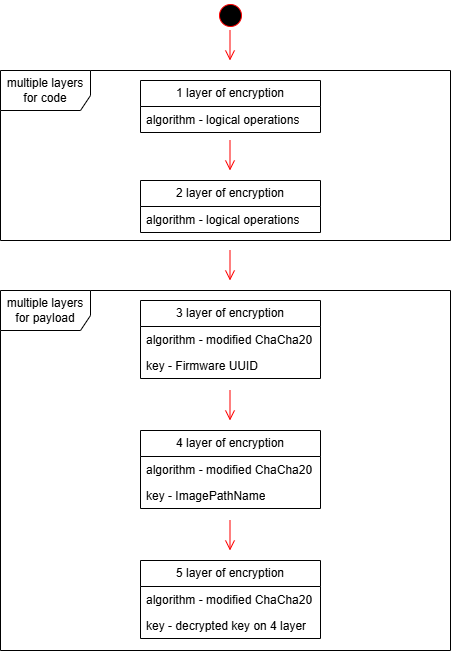
But this wasn’t just a “plug-and-play” backdoor. Trinper’s loader employed five layers of encryption, utilizing ChaCha20, modified BLAKE2b hashes, and even machine-specific environmental checks. It was decrypted only on intended systems, using unique hardware identifiers like firmware UUIDs and PEB structures. 

Source: global.ptsecurity.com 

Interestingly, researchers found that Team46, a different APT group shares many similarities with TaxOff in terms of TTPs. This overlap raises the possibility that TaxOff and Team46 are the same group operating under different aliases.

Both groups have used PowerShell-based loaders and Cobalt Strike as their primary exploitation vectors. 

This flaw allows threat actors to:

  • Execute arbitrary code
  • Bypass Chrome’s built-in security sandbox
  • Potentially gain remote control over the system

Recommendation 

The rapid exploitation of CVE-2025-2783 highlights the critical importance of timely patch management. Google released a fix for this vulnerability in March 2025, and all users are strongly advised to update their Chrome browsers to the latest version immediately. 

In addition to patching, organizations should implement the following defensive measures 

  • Enhance email filtering systems and provide regular phishing awareness training for employees. 
  • Continuously monitor systems for unusual or suspicious behavior related to script execution or network anomalies. 
  • Restrict the execution of unsigned or obfuscated scripts and macros, particularly in email attachments or downloaded files, using tools like AppLocker or Microsoft Defender ASR. 

References

Apache Tomcat Vulnerabilities Expose Systems to DoS & Authentication Bypass  

Security Advisory; Summary

Multiple vulnerabilities have been identified in Apache Tomcat affecting various versions and critical security updates provided to address four newly discovered vulnerabilities in Apache Tomcat. The disclosed Apache Tomcat vulnerabilities pose serious threats, especially in high-availability or internet-exposed environments.

Apache Tomcat is one of the world’s most widely used open-source Java servlet containers.

OEM Apache 
Severity High 
CVSS Score 8.4 
CVEs CVE-2025-48976, CVE-2025-48988, CVE-2025-49125, CVE-2025-49124 
Actively Exploited No 
Exploited in Wild No 
Advisory Version 1.0 

Overview 

The affected versions 9.0.x, 10.1.x and 11.0.x, also include high-impact denial-of-service (DoS) vulnerabilities and a moderate authentication bypass flaw as well as a Windows installer issue that may allow privilege escalation via side-loading. 

Timely patching is essential to prevent potential service disruptions and unauthorized access. 

Vulnerability Name CVE ID Product Affected Severity 
​Memory Exhaustion via Multipart Header Exploitation  CVE-2025-48976 Apache Tomcat  High 
Multipart Upload Resource Exhaustion  CVE-2025-48988 Apache Tomcat  High 
Security Constraint Bypass (Pre/PostResources)  CVE-2025-49125 Apache Tomcat  High 
Windows Installer Side-Loading Risk  CVE-2025-49124 Apache Tomcat  High 

Technical Summary 

The vulnerabilities affect Tomcat’s handling of multipart HTTP requests, resource mounting and Windows installation process. Exploitation may result in denial-of-service (via memory exhaustion), privilege escalation (via installer abuse) and authentication bypass. 

CVE ID System Affected Vulnerability Details Impact 
  CVE-2025-48976 Apache Tomcat 9.0.0.M1–9.0.105, 10.1.0-M1–10.1.41, 11.0.0-M1–11.0.7 Fixed memory allocation limit in multipart header processing could be exploited to consume memory and cause DoS.  Denial-of-service attack. 
  CVE-2025-48988 Apache Tomcat 9.0.0.M1–9.0.105, 10.1.0-M1–10.1.41, 11.0.0-M1–11.0.7 Multipart request body with many parts can trigger high memory usage due to improper limit handling between parameters and parts.  Denial-of-service attack. 
  CVE-2025-49125  Tomcat with Pre/Post Resources enabled Lack of resource path normalization allows attackers to access resources outside root bypassing auth controls. Authentication and Authorization Bypass. 
  CVE-2025-49124  Tomcat Windows Installers Installer invoked icacls.exe without full path, making it vulnerable to side-loading attacks via PATH manipulation. Privilege Escalation. 

Remediation

Update Immediately: Users of the affected versions should apply one of the following mitigations. 

  • Upgrade to Apache Tomcat 11.0.8 or later 
  • Upgrade to Apache Tomcat 10.1.42 or later   
  • Upgrade to Apache Tomcat 9.0.106 or later 

Conclusion: 

Attackers could exploit these flaws to cause denial-of-service, escalate privileges or bypass authentication and authorization controls. 

The Apache Software Foundation credits the TERASOLUNA Framework Security Team of NTT DATA Group Corporation and T. Doğa Gelişli for identifying these issues.

Tomcat is widely used in enterprise and cloud environments, prompt patching is essential to prevent potential exploitation, service outages, or unauthorized access.

References

  • https://lists.apache.org/thread/0jwb3d3sjyfk5m6xnnj7h9m7ngxz23db 

Cyber-Security News at a Glance: June1st -June15th, 2025

The current cybersecurity landscape continues to evolve, marked by persistent challenges and digital technologies transforming the cyber world. Across industries such as healthcare and financial services, in the month of June,2025, organizations navigated advanced threats, cyber attacks on retail sector including Security advisory’s etc.

Let’s explore the key trends and incidents from June1st -June15th, 2025

Microsoft June 2025 Patch Tuesday addresses a total of 67 vulnerabilities across its product ecosystem. Critical flaws in WebDAV, SMB, SharePoint and Remote Desktop Services highlight the urgency of installing this month’s updates.

Microsoft June 2025 Patch Tuesday – 67 Vulnerabilities Fixed Including 2 Zero-Days 

NCSC UK, released set of 6 principles to build Cyber Security culture & Boost Resilience for Orgs

The U.K. National Cyber Security Centre on Wednesday published six cybersecurity culture principles developed through extensive research with industry and government partners.

The principles define the cultural foundations essential for building a cyber-resilient organization and offer guidance on how to cultivate that environment.

NCSC UK, released set of 6 principles to build Cyber Security culture & Boost Resilience for Orgs

Critical 0-Day RCE Vulnerability in Fortinet Products (CVE-2025-32756) Actively Exploited 

A critical unauthenticated Remote Code Execution (RCE) vulnerability, tracked as CVE-2025-32756, has been identified in multiple Fortinet products.

The flaw is currently under active exploitation, allowing attackers to take full control of affected systems via a buffer overflow in the /remote/hostcheck_validate endpoint. A public PoC is available, significantly increasing the risk to unpatched devices. 

CVE-2025-32756 is a critical unauthenticated Remote Code Execution (RCE) vulnerability affecting multiple Fortinet products. The vulnerability resides in the /remote/hostcheck_validate endpoint and is due to improper bounds checking when parsing the enc parameter of the AuthHash cookie.

POC Released for Critical RCE Vulnerability in AWS Amplify Codegen-UI 

 A critical security vulnerability has been disclosed in AWS Amplify Studio’s UI generation framework, with researchers releasing a proof-of-concept exploit demonstrating remote code execution capabilities.  AWS addressed the issue in version 2.20.3, replacing the unsafe eval() with a sandboxed expression evaluator. 

Vulnerable versions used eval() to interpret stringified JavaScript expressions in UI components. This allowed injection of malicious expressions such as shell commands, due to the absence of validation or blacklisting.  

Splunk Enterprise & Cloud platform found that  (XSS) vulnerability existed & affects their multiple versions

Splunk has disclosed a medium-severity cross-site scripting (XSS) vulnerability affecting multiple versions of its Enterprise and Cloud Platform products that could allow low-privileged attackers to execute malicious JavaScript code in users’ browsers.

A security vulnerability identified as CVE-2025-20297 has been found in older versions of Splunk Enterprise and Splunk Cloud Platform.

Reflected XSS Vulnerability in Splunk Enterprise & Cloud Platform 

(DoS) Vulnerability has been identified in ModSecurity, an open-source web application

The issue affects versions prior to 2.9.10 and related to the “sanitiseArg” action, which can be exploited by adding an excessive number of arguments, ultimately causing the system to fail or crash. The vulnerability has been fixed in version 2.9.10. 

This vulnerability is similar to this CVE-2025-47947 issue, presents a significant risk, especially for organizations relying on ModSecurity 2.x versions for web application protection. 

High Risk DoS Vulnerability in ModSecurity WAF 

Multiple vulnerabilities have been discovered in IBM QRadar Suite Software and Cloud Pak, affecting versions 1.10.0.0 through 1.11.2.0.

The company released patches on June 3, 2025, addressing five distinct Common Vulnerabilities and Exposures (CVEs) that affect enterprise security infrastructure used by organizations worldwide.

The most critical vulnerability (CVE-2025-25022) allows unauthenticated access to sensitive configuration files. IBM has released version 1.11.3.0 to address these issues. 

Critical Vulnerabilities Patched in IBM QRadar Suite & Cloud Pak for Security 

Google has released a critical out-of-band security update for its Chrome browser to address CVE-2025-5419.

Rated as high-severity zero-day vulnerability in the V8 JavaScript engine that is currently being actively exploited in the wild. Google has released a critical out-of-band security update for its Chrome browser to address CVE-2025-5419.

This vulnerability allows attackers to execute arbitrary code on users’ systems through specially crafted web content, making it a serious threat requiring immediate attention. 

Google Chrome Patches Actively Exploited Zero-Day Vulnerability 

Ways to combat Cyber Threats; Strengthen your SOC’s readiness involves 3 key strategies

Cyber threats are no longer limited to human attackers, with AI-driven “bad bot” attacks now accounting for 1/3 as per research. These attacks can be automated, allowing attackers to launch more extensive and efficient campaigns

Organizations are now exposed new risks, providing cybercriminals with more entry points and potential “surface areas” to exploit as they go digital and adopt to innovations and wider use of digital technologies.

Some of the types of bad bots are DDoS bots, which disrupt a website or online service by overwhelming it with traffic from multiple sources.

IntruceptLabs now offers Mirage Cloak and to summarise Mirage Cloak offers various deception methods to detect and stop threats before they cause damage.

These methods include adding decoys to the network, deploying breadcrumbs on current enterprise assets, using baits as tripwires on endpoints.

 This is executed by setting up lures with intentionally misconfigured or vulnerable services or applications.

The flexible framework also lets customers add new deception methods as needed.

Conclusion: Organizations can better protect their digital assets and ensure business continuity by understanding the key components and best practices for building a successful SOC.

At the end  we must accept that to defend against any sort of AI attack, SOC teams must evolve with right collaborations and effective communication between partners seamlessly to evaluate information to stay ahead of attackers.
Microsoft June 2025 Patch Tuesday – 67 Vulnerabilities Fixed Including 2 Zero-Days 

Summary : Microsoft’s June 2025 Patch Tuesday addresses a total of 67 vulnerabilities across its product ecosystem. Critical flaws in WebDAV, SMB, SharePoint and Remote Desktop Services highlight the urgency of installing this month’s updates.

OEM Microsoft 
Severity Critical 
Date of Announcement 2025-06-10 
No. of Vulnerabilities Patched 67 
Actively Exploited Yes 
Exploited in Wild Yes 
Advisory Version 1.0 

Overview 

These include multiple high-risk flaws and two zero-day vulnerabilities one actively exploited and one publicly disclosed affecting core components like Windows WebDAV and the SMB Client. 

  • 67 Microsoft CVEs addressed 
  • 3 non-Microsoft CVEs addressed 

Breakdown of May 2025 Vulnerabilities 

  • 25 Remote Code Execution (RCE) 
  • 17 Information Disclosure 
  • 14 Elevation of Privilege (EoP) 
  • 6 Denial of Service (DoS)  
  • 3 Security Feature Bypass 
  • 2 Spoofing 
  • 2 Chromium (Edge) Vulnerabilities 
  • 1 Windows Secure Boot 
Vulnerability Name CVE ID Product Affected Severity CVSS Score 
WebDAV Remote Code Execution (Exploited in the wild)  CVE-2025-33053 Windows High 8.8 
SMB Client Elevation of Privilege (Publicly disclosed) CVE-2025-33073 Windows  High 8.8 

Technical Summary 

Two zero-day vulnerabilities in Microsoft’s ecosystem were addressed in June 2025. One of these, CVE-2025-33053, has been exploited in the wild and affects the deprecated but still present WebDAV component in Windows. The other, CVE-2025-33073, was publicly disclosed and affects the Windows SMB client, enabling attackers to elevate privileges. 

CVE ID System Affected Vulnerability Details Impact 
CVE-2025-33053 Windows 10,11 and Windows Server WebDAV RCE triggered when a user clicks a malicious link. Exploited by APT group “Stealth Falcon.” Exploitation complexity is low. Remote Code Execution 
CVE-2025-33073 Windows 10,11 and Windows Server EoP flaw in SMB Client. Exploitation may occur by connecting to a malicious SMB server. Privilege elevation to SYSTEM is possible. Elevation of Privilege  

Source: Microsoft and NVD 

In addition to the zero-day vulnerabilities, several other critical and high-severity issues were addressed: 

  • CVE-2025-47162, CVE-2025-47164, CVE-2025-47167: Microsoft Office, Preview Pane-based RCE vulnerabilities, exploitation more likely (CVSS 8.4) 
  • CVE-2025-47172: Microsoft SharePoint Server, SQL injection-based RCE (CVSS 8.8) 
  • CVE-2025-29828: Windows Cryptographic Services, memory release issue (CVSS 8.1) 
  • CVE-2025-32710: Windows Remote Desktop Services, use-after-free vulnerability (CVSS 8.1) 
  • CVE-2025-29976: Microsoft SharePoint, Local privilege escalation (CVSS 7.8) 
  • CVE-2025-30393: Microsoft Excel, RCE via malicious Excel file (CVSS 7.8) 
  • CVE-2025-24063: Windows Kernel, Local privilege escalation, marked “Exploitation More Likely” (CVSS 7.8) 
  • CVE-2025-32702: Visual Studio, Command injection RCE via malicious project file (CVSS 7.8) 
  • CVE-2025-26685: Microsoft Defender for Identity, Spoofing via NTLM fallback, exploitable in adjacent networks (CVSS 6.5) 

Remediation

  • Apply Patches Promptly: Install the June 2025 security updates immediately to mitigate risks. 

General Recommendations: 

  • Prioritize Zero-Days: Focus on patching the two confirmed zero-day vulnerabilities, especially those allowing Elevation of Privilege and remote code execution. 
  • Disable Deprecated Services: If not required, disable WebDAV (WebClient service) and SMBv1 to reduce exposure. 
  • Enforce SMB Signing: Use Group Policy to mandate SMB signing, reducing the risk from CVE-2025-33073. 
  • Monitor for Exploitation Attempts: Watch for suspicious SMB or WebDAV traffic in logs and endpoint detection systems. 
  •  Enable Auto Updates Where Feasible: For individual endpoints and less tightly controlled systems, enable automatic updates to maintain regular patch schedule. 

Conclusion: 

Microsoft’s June 2025 Patch Tuesday addresses two important zero-day vulnerabilities, including an actively exploited RCE in WebDAV tracked as CVE-2025-33053.

Organizations should prioritize these patches to mitigate risk from real-world threats. The CVE-2025-33053 vulnerability has also been added to CISA’s Known Exploited Vulnerabilities (KEV) catalog, emphasizing its urgency. 

References

Scroll to top