
Threat Landscape Expands in Supply Chain Due to Ransomware Attacks
How Ransomware Supply Chain Attacks Works
Continue ReadingHow Ransomware Supply Chain Attacks Works
Continue ReadingEncryption is often taken as last line of defense and organizations are using encryption to secure their data. Understanding and adopting the latest encryption technologies is crucial for keeping data secure. In current scenario when attackers are equally lazed with latest technologies, companies can strengthen their cybersecurity strategies and continue to adapt encryption as last line of their defense. When organizations enhance their encryption practices today, they can protect their digital assets for the future.
As cyber attacks are evolving so as encryption advances. Now numerous key developments will shape the future of cybersecurity. Once inside the network, cyber criminals can easily view and steal sensitive data. If that data is encrypted, they have no way of accessing it without a decryption key, saving the data from being compromised.
For example, the continuous evolution of quantum computing presents challenges and opportunities for encryption. Quantum-resistant algorithms must increase in speed to enhance security against quantum attacks.
The FinWise Data Breach a Stark Example
On May 31, 2024, the ex-employee accessed FinWise Bank’s systems after leaving the company and leaked sensitive personal information belonging to 689,000 customers of American First Finance (AFF). Even more alarming, this unauthorized access went undetected for more than a year before being discovered by the bank on June 18, 2025.
The FinWise Data breach revealed lapses like time gap between the initial breach and its discovery. The Bank came to understand about the incident and notified affected customers in June 2025 which was over a year after the breach occurred. This was a huge time gap and lawsuits allege that the stolen data may not have been adequately encrypted and secured, causing public criticism and concern.
Security experts emphasize that a well-designed information protection framework must not only encrypt critical financial data but also proactively detect and prevent abnormal access attempts.
Quantum computing & Encryption
Organizations who relies on encryption to keep its critical business communications and data safe are secure now. But as per RAND, experts expect quantum computers capable of breaking today’s encryption standards to arrive by the 2030sOpens a new window .
In the latest updates The Federal Trade Commission (FTC) has sent letters to major tech companies in the United States, urging them to resist foreign governments’ demands to weaken encryption.
The letters were sent by FTC Chairman Andrew Ferguson to Akamai, Alphabet (Google), Amazon, Apple, Cloudflare, Discord, GoDaddy, Meta, Microsoft, Signal, Snap, Slack, and X.
Traditional encryption relies on math problems that would take classical computers centuries to solve. RSA encryption, which protects much of today’s internet traffic, works because factoring massive numbers is impossibly hard for regular computers. But tomorrow’s computers will make quick work of it. According to the MIT Technology Review, researchers have shown that a quantum computer with 20 million noisy qubits could crack RSA-2048 in just 8 hoursOpens a new window .
The question is Encryption alone is sufficient to protect data
As per researchers Encryption alone is no longer sufficient to protect privacy in LLM interactions, as metadata patterns can be exploited to infer sensitive subjects and corporate intent. Researchers at Microsoft have revealed a new side channel attack named Whisper Leak that can reveal the topic of encrypted conversations between users and language models, even without access to the underlying text.
The discovery highlights a growing blind spot in AI security where encryption alone no longer guarantees privacy in model interactions.
What we must know about Whisper Leak the side channel attack
Whisper Leak exploits often exploits a side channel in network communication rather than a flaw in encryption itself. LLM services generate responses step by step, by producing one token at a time instead of the entire response at once. Also, the communications with AI-powered chatbots are often encrypted with HPPS over TLS (HTTPS), ensuring the authenticity of the server and security through encryption.
A side channel attack breaks cryptography by using information leaked by cryptography, such as monitoring the electromagnetic field (EMF) radiation emitted by a computer screen to view information before it’s encrypted in a van Eck phreaking attack, aka Transient Electromagnetic Pulse Emanation STandard (TEMPEST).
Encryption the last line in defense & Helps Orgs Embrace GDPR
If sensitive information is no longer required, the best way to protect it is to delete it. However, when files are deleted from a hard drive they leave traces that can be reconstructed by thieves and hackers. By encrypting the files before deletion, the remnants that remain on the drive will remain encrypted and remain inaccessible should they be reconstructed. In this way, encryption protects your privacy, even when the files are gone.
Companies should, therefore, ensure that all devices leaving the workplace are encrypted. Most phones have a native encryption option that can be easily activated, while laptops can have either their hard drives or sensitive data encrypted depending on the tools an organization wants to use.
Nowadays data protection is no longer an option. Companies can’t ignore the problem and hope they won’t be targeted by malicious threat actors.
GDPR itself recommends encryption as an effective tool for data protection as do data protection standards such as the CIS Controls which advocate a data security strategy based on a combination of encryption, integrity protection and data loss prevention techniques.
At the end Encryption ensures that, whether these devices are lost, stolen or forgotten, the data on them is useless to anyone who tries to access it without a decryption key.
(Source: https://www.bleepingcomputer.com/news/security/finwise-data-breach-shows-why-encryption-is-your-last-defense/)
Sources: https://www.csoonline.com/
Summary: Microsoft Teams Access Token Vulnerability: New Attack Vector for Data Exfiltration
A recently uncovered vulnerability in Microsoft Teams for Windows allows attackers with local access to extract encrypted authentication tokens, granting unauthorized access to chats, emails and SharePoint files.
This technique, detailed by researcher Brahim El Fikhi on October 23, 2025, leverages the Windows Data Protection API (DPAPI) to decrypt tokens stored in a Chromium-like Cookies database.
Attackers can use these tokens for impersonation, lateral movement, or social engineering, bypassing recent security enhancements and posing significant risks to enterprise environments.
Vulnerability Details
The vulnerability, identified in Microsoft Teams desktop applications, involves the extraction of encrypted access tokens stored in the SQLite Cookies database at %AppData%\Local\Packages\MSTeams_8wekyb3d8bbwe\LocalCache\Microsoft\MSTeams\EBWebView\Cookies. Unlike earlier versions that stored tokens in plaintext (a flaw exposed by Vectra AI in 2022), current versions use AES-256-GCM encryption protected by DPAPI, tied to user or machine credentials. However, attackers with local access can decrypt these tokens using tools like ProcMon and Mimikatz, exploiting the embedded msedgewebview2.exe process that handles authentication via login.microsoftonline.com.

Source: blog.randorisec.fr, cybersecuritynews
Attack Flow


| Step | Description |
| Craft | Attackers use ProcMon to monitor msedgewebview2.exe and identify the Cookies database write operations. |
| Access | The ms-teams.exe process is terminated to unlock the Cookies file, which is locked during operation. |
| Extract | The encrypted token is retrieved from the Cookies database, with fields like host_key (e.g., teams.microsoft.com), name, and encrypted_value (prefixed with “v10”). |
| Decrypt | The DPAPI-protected master key is extracted from %AppData%\Local\Packages\MSTeams_8wekyb3d8bbwe\LocalCache\Microsoft\MSTeams\EBWebView\Local State and decrypted using Windows APIs or tools like Mimikatz. |
| Exploit | Decrypted tokens are used with tools like GraphSpy to access Teams chats, send messages, read emails, or interact with SharePoint via Microsoft Graph API |
Why It’s Effective
Recommendations:
Conclusion:
This vulnerability underscores the evolving threat landscape for collaboration platforms like Microsoft Teams. As attackers refine techniques to exploit trusted systems, organizations must enhance endpoint monitoring and adopt stricter access controls. By implementing the outlined mitigations, security teams can reduce the risk of token-based attacks and safeguard sensitive data.
References:
AI Ransomware ‘PromptLock’ uses OpenAI gpt-oss-20b Model for Encryption has been identified by ESET research team, is believed to be the first-ever ransomware strain that leverages a local AI model to generate its malicious components. As we Deep dive into AI Ransomware we discover the intricacies and challenges organizations face dure to AI ransomware.
The malware uses OpenAI’s gpt-oss:20b model via the Ollama API to create custom, cross-platform Lua scripts for its attack.
PromptLock is written in Golang and has been identified in both Windows and Linux variants on the VirusTotal repository and uses the gpt-oss:20b model from OpenAI locally via the Ollama API to generate malicious Lua scripts in real-time.
ESET researchers have discovered the first known AI-powered ransomware. The malware, which ESET has named PromptLock, has the ability to exfiltrate, encrypt and possibly even destroy data, though this last functionality appears not to have been implemented in the malware yet.
PromptLock was not spotted in actual attacks and is instead thought to be a proof-of-concept (PoC) or a work in progress, ESET’s discovery shows how malicious use of publicly-available AI tools could supercharge ransomware and other pervasive cyberthreats.
“The PromptLock malware uses the gpt-oss-20b model from OpenAI locally via the Ollama API to generate malicious Lua scripts on the fly, which it then executes. PromptLock leverages Lua scripts generated from hard-coded prompts to enumerate the local filesystem, inspect target files, exfiltrate selected data, and perform encryption,” said ESET researchers.
New Era of AI Generated Ransomware
A tool can be used to automate various stages of ransomware attacks and the same can be said as AI-powered malware are able to adapt to the environment and change its tactics on the fly and warns of a new frontier in cyberattacks.
Its core functionality is different then traditional ransomware, which typically contains pre-compiled malicious logic. Instead, PromptLock carries hard-coded prompts that it feeds to a locally running gpt-oss:20b model.
As per researchers for its encryption payload, PromptLock utilizes the SPECK 128-bit block cipher, a lightweight algorithm suitable for this flexible attack model.
ESET researchers emphasize that multiple indicators suggest PromptLock is still in a developmental stage. For instance, a function intended for data destruction appears to be defined but not yet implemented.
Malware Family: Filecoder.PromptLock.A
SHA1 Hashes:
24BF7B72F54AA5B93C6681B4F69E579A47D7C102AD223FE2BB4563446AEE5227357BBFDC8ADA3797BB8FB75285BCD151132A3287F2786D4D91DA58B8F3F4C40C344695388E10CBF29DDB18EF3B61F7EF639DBC9B365096D6347142FCAE64725BD9F73270161CDCDB46FB8A348AEC609A86FF5823752065D2Given LLMs’ success, many companies and academic groups are currently creating all kinds of models and constantly developing variants and improvements to LLM. In the context of LLMs, a “prompt” is an input text given to the model to generate a response.
The success rate is high so threat actors are leveraging these models for illicit purposes, making it easier to create sophisticated attacks like ransomware and evade traditional defenses. sale of models Now
By automating the creation of phishing emails, ransomware scripts, and malware payloads, LLMs allow less skilled attackers to conduct sophisticated campaigns.
For AI-powered ransomware
AI-powered ransomware is a challenging threat to organizations far and above older attack tactics adopted by cyber criminals. If organization’s basic defensive methods such as ensuring critical vulnerabilities are patched as soon as possible, network traffic is monitored and implementing offline backups applied on time.
How Intrucept helps Defend Against AI-Powered Ransomware
Analyzing threat by behavior allows for early detection and response to malware threats and alert generation,. This reduces the risk of data exfiltration.
Intru360
Intru360 gives security analysts and SOC managers a clear view across the organization, helping them fully understand the extent and context of an attack. It also simplifies workflows by automatically handling alerts, allowing for faster detection of both known and unknown threats.
Identify latest threats without having to purchase, implement, and oversee several solutions or find, hire, and manage a team security analyst.
Unify latest threat intelligence and security technologies to prioritize the threats that pose the greatest risk to your company.
Here are some features we offer:
Source of above graphics : Courtesy: First AI Ransomware ‘PromptLock’ Uses OpenAI gpt-oss-20b Model for Encryption
Overview Security Advisory:
WhatsApp provides end-to-end encryption by default, ensuring that only you and your intended recipient can read messages. However, encryption alone does not guarantee complete privacy. Misconfigured or disabled privacy settings may still expose user information, media or allow unauthorized access.
These advisory highlights the most important privacy features that should be enabled, along with a checklist for additional protections.
Critical Privacy Features to Enable
This feature strengthens the security of your conversations by limiting how chats and media can be shared outside WhatsApp.
Benefits:
While chats are encrypted in transit, backups stored on Google Drive or iCloud are not encrypted by default. Activating encrypted backups ensures:
This feature allows messages to auto-delete after 24 hours, 7 days, or 90 days.
Benefits:
Quick Setup Checklist
| Step | Action |
| 1 | Enable Advanced Chat Privacy in all important chats |
| 2 | Turn on End-to-End Encrypted Backup |
| 3 | Run Privacy Checkup: review visibility and group settings |
| 4 | Activate Disappearing Messages where appropriate |
| 5 | Enable App/Chat Locks (biometric/PIN) |
| 6 | Set up Two-Factor Authentication |
| 7 | Disable Media Auto-Saving |
| 8 | Check Linked Devices and log out extras |
| 9 | Restrict visibility of Last Seen, Profile Photo, About, and disable Read Receipts if desired |
Recommendations
Conclusion:
Strengthening WhatsApp privacy settings is critical for protecting both personal and professional communication. Enabling key features like Advanced Chat Privacy, Encrypted Backups, and Disappearing Messages provides stronger control over data security and reduces risks of unauthorized access or misuse.
Amazon S3 buckets encrypted using AWS’s Server-Side Encryption with Customer Provided Keys (SSE-C) and somehow the threat actors knew details of the keys. And this made them demand ransoms to demand the decryption key.
The campaign was discovered by Halcyon , and according to them the threat actors after exploiting the compromised keys, they called the “x-amz-server-side-encryption-customer-algorithm” header and use a locally stored AES-256 encryption key they generate to lock up the victims’ files. There is great chance that more cyber criminal groups can adopt the tactic and use.
The threat actor looks for keys with permissions to write and read S3 objects (s3:GetObject and s3:PutObject requests), and then launches the encryption process by calling the SSE-C algorithm, utilizing a locally generated and stored AES-256 encryption key.
“It is important to note that this attack does not require the exploitation of any AWS vulnerability but instead relies on the threat actor first obtaining an AWS customer’s account credentials,” Halcyon notes.
According to Halcyon, because the attack relies on AWS’s infrastructure for encryption, it is impossible to recover the encrypted data without the symmetric AES-256 keys required to decrypt it. Halcyon reported its findings to Amazon, and the cloud services provider told them that they do their best to promptly notify customers who have had their keys exposed so they can take immediate action.
In recent month hackers and cyber criminal have gained traction In recent months and have begun targeting their product gateways and find ways to extort customers using it.
Unlike traditional ransomware that encrypts files locally, this attack operates directly within the AWS environment, exploiting the inherent security of SSE-C to render data irretrievable without the attacker’s decryption keys says Halcyon team.
Ransomware capabilities gain new tactics where the threat actor first obtains an AWS customer’s account credentials and there is no know method that data can be recovered without paying the ransom.
As per AWS they encourage customers to utilize their security tools, such as IAM roles, Identity Center and Secrets Manager, to minimize credential exposure and improve defense postures.
Sources:
https://www.theregister.com/2025/01/13/ransomware_crew_abuses_compromised_aws/
www.Bleeping computers.com
Overview
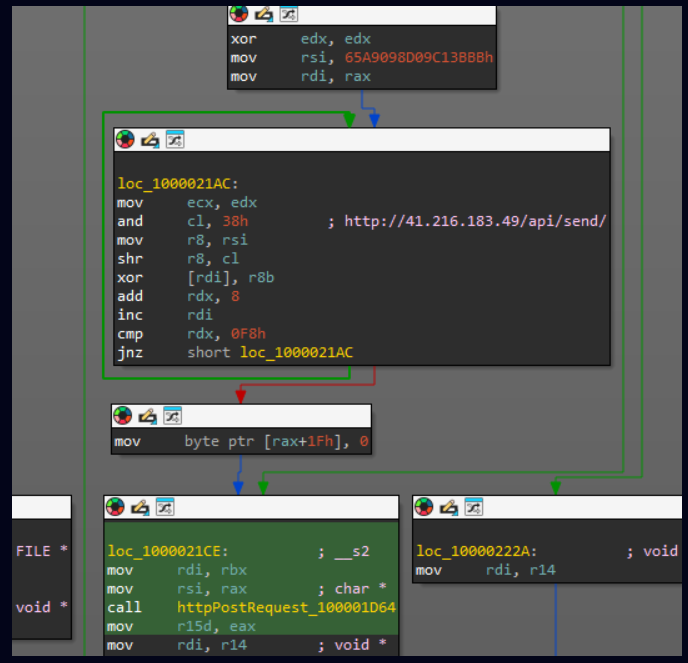
Cybersecurity researchers at Check Point Research (CPR) have discovered a sophisticated macOS malware called Banshee Stealer, putting over 100 million macOS users globally at risk. The malware, designed to exfiltrate sensitive user data, demonstrates advanced evasion techniques, posing a significant threat to users and organizations relying on macOS.
Key Threat Details:
Malware Capabilities:

C&C decryption Source: Cybersecurity News
Evasion Tactics:
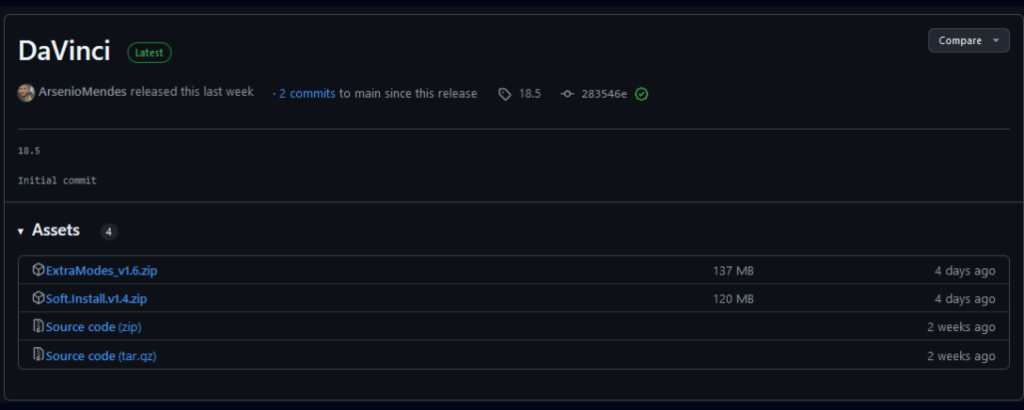
Distribution Mechanisms:

Repository releases source: Cybersecurity News
Recent Developments:
Impact:
Indicators of Compromise (IOCs):
The IOCs listed below are associated with the threat. For the full list of IOCs, please refer to the link .
| IP Address and Domain | File Hash |
| 41.216.183[.]49 | 00c68fb8bcb44581f15cb4f888b4dec8cd6d528cacb287dc1bdeeb34299b8c93 |
| Alden[.]io | 1dcf3b607d2c9e181643dd6bf1fd85e39d3dc4f95b6992e5a435d0d900333416 |
| api7[.]cfd | 3bcd41e8da4cf68bb38d9ef97789ec069d393306a5d1ea5846f0c4dc0d5beaab |
| Authorisev[.]site | b978c70331fc81804dea11bf0b334aa324d94a2540a285ba266dd5bbfbcbc114 |
Recommendations:
To mitigate the risks associated with Banshee Stealer, consider implementing the following proactive measures:
Conclusion:
The rise of the Banshee malware exemplifies the increasing sophistication of threats targeting macOS. Users and organizations must adopt layered security defenses, maintain vigilance, and prioritize awareness to mitigate the risks of advanced malware like Banshee. By leveraging updated tools and practices, you can safeguard critical systems and data from evolving cyber threats.
References:
Cyber security trends as per research and data available shows that responsible AI will gain importance with more public scrutiny of risks growing along with remediation practices. Organizations will now require to balance taking risks with AI and having rapid remediation strategies available.
As per experts the areas that will get attention will be cloud security and data location. In 2025, new laws may require that sensitive data stay within national borders, affecting how companies manage and store data across regions. As businesses and critical services become increasingly dependent on cloud services, some countries may prioritize cloud availability in national emergency plans, recognizing that stable cloud access is mandatory for crisis management. This shift could lead towards the establishment of a new program like Cloud Service Priority (CSP), treating cloud infrastructure as important as utilities like electricity and telecoms.
How organization need to prepare themselves as big and small businesses and brands will see dramatically increased risks, as bad actors using AI will launch convincing impersonation attacks. This will make it easier with higher accuracy than ever to fool customers and clients.
Key Cyber Security Trends of 2025

Gen-AI

Digitalization
IoT Devices Vulnerable

Ransomware
AI /ML

Quantum Computing
Regulations


Organizations need bespoke solutions to defend against attacks across email, social, and other channels as we witness evolving nature of attacks demands continuous weekly innovation to stay ahead. The use of Multifactor authentication reduces the danger in identity and access management EDR solutions with feeds of threat intelligence will gain prominence. Intrucept is dedicated in helping organizations to run fast and be secure. We will always find that being easy and slowing down is a tendency but we as organization try to enable our customers to maintain speed (and even accelerate).
References:
Recent Comments