
Patch managment

Privilege Escalation Vulnerability in AI Engine WordPress Plugin, Allows Subscriber-Level Account Takeover 

Summary :Security Advisory: A critical privilege escalation vulnerability (CVE-2025-5071) was discovered in the AI Engine WordPress plugin, allowing subscriber-level users to gain administrator privileges when the MCP (Model Context Protocol) module is enabled.

OEM WordPress 
Severity High 
CVSS Score 8.8 
CVEs CVE-2025-5071 
POC Available Yes 
Actively Exploited No 
Exploited in Wild No 
Advisory Version 1.0 

Overview 

The AI Engine plugin for WordPress is vulnerable to unauthorized modification of data and loss of data due to a missing capability check on the ‘Meow_MWAI_Labs_MCP::can_access_mcp’ function in versions 2.8.0 to 2.8.3.

This makes it possible for authenticated attackers, with subscriber-level access and above, to have full access to the MCP and run various commands like ‘wp_create_user’, ‘wp_update_user’ and ‘wp_update_option’, which can be used for privilege escalation, and ‘wp_update_post’, ‘wp_delete_post’, ‘wp_update_comment’ and ‘wp_delete_comment’, which can be used to edit and delete posts and comments.

Vulnerability Name CVE ID Product Affected Severity Fixed Version 
​Privilege Escalation Vulnerability  CVE-2025-5071 AI Engine WordPress Plugin  High  2.8.4 

Technical Summary 

AI Engine is a WordPress plugin that recently introduced support for MCP (Model Context Protocol), which allows AI agents – such as Claude or ChatGPT – to control and manage the WordPress website by executing various commands, managing media files, editing users, and performing complex tasks more reliably than through standard APIs.

The vulnerability stems from insufficient authorization checks in the can_access_mcp () function within the plugin, enabling any authenticated (logged-in) user to bypass Bearer Token validation and access MCP endpoints.

This access can be exploited to escalate user privileges by executing commands such as wp_update_user, ultimately leading to full site compromise. 

CVE ID System Affected  Vulnerability Details Impact 
  CVE-2025-5071  WordPress with AI Engine Plugin 2.8.0–2.8.3 The can_access_mcp() function incorrectly grants MCP endpoint access to all logged-in users. Even when Bearer Token authentication is enabled, lack of empty value checks in the token validation logic allows privilege escalation.  Complete site compromise 

Remediation

  • Immediate Action: Update the AI Engine plugin to version 2.8.4 or later. 
  • Configuration Check: Ensure that MCP and Dev Tools modules remain disabled unless it’s necessary. 

Conclusion: 
The CVE-2025-5071 vulnerability in the AI Engine WordPress plugin highlights the potential risks when advanced modules like MCP are misconfigured.

Even though the feature is disabled by default, sites that have enabled it become susceptible to complete takeover by authenticated users.

Website administrators are urged to update to version 2.8.4 immediately and verify that security best practices are enforced to prevent such escalations. With over 100,000 active installations, this flaw presents a significant risk to the WordPress ecosystem if left unpatched. 

References

t  

Critical Chrome Vulnerability (CVE-2025-2783) Exploited in Cyber-Espionage Campaign

OEMGoogle Chrome
SeverityHigh
CVSS8.3
CVEsCVE-2025-2783
Exploited in WildYes
Patch/Remediation AvailableYes
Advisory Version1.0

Overview

The Cybersecurity and Infrastructure Security Agency (CISA) has issued an urgent advisory regarding the critical zero-day vulnerability, CVE-2025-2783, in Google Chrome and other Chromium-based browsers on Windows. This vulnerability is actively exploited in the wild and has been added to CISA’s Known Exploited Vulnerabilities (KEV) catalog, urged immediate patching to prevent security breaches and unauthorized system access.

Vulnerability NameCVE IDProduct AffectedSeverityFixed Version
  Google Chromium Mojo Sandbox Escape Vulnerability  CVE-2025-2783  Google Chrome  High  134.0.6998.117/.118

Technical Summary

This high-severity vulnerability found in the Mojo framework of Chromium-based browsers including Google Chrome, Microsoft Edge, and Opera, Brave etc. The vulnerability originates from a logic error that results in an incorrect handle being provided under certain conditions. This flaw allows attackers to bypass Chrome’s sandbox protections and potentially execute arbitrary code on the affected system.

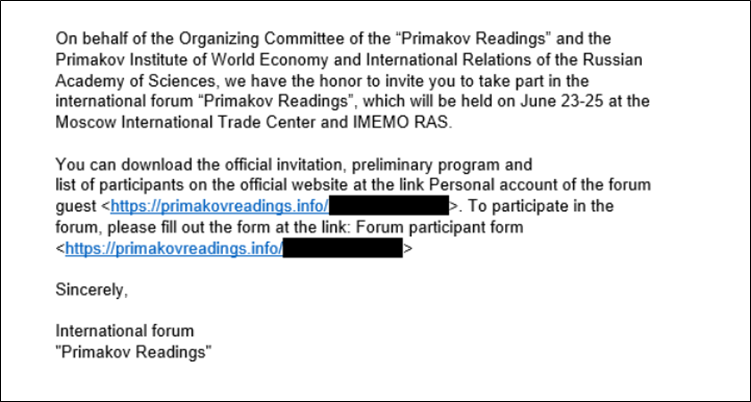
Security researchers from Kaspersky discovered this zero-day vulnerability as part of an advanced cyber-espionage campaign dubbed “Operation ForumTroll.” The attack campaign targeted media outlets, educational institutions, and government organizations in Russia through highly personalized phishing emails.

The exploit chain is particularly dangerous because it requires minimal user interaction. Victims only need to click on a malicious link in a phishing email, after which the attack executes automatically without any additional action from the user. Once triggered, the exploit allows attackers to escape Chrome’s sandbox environment, leading to remote code execution and possible system compromise.

CVE IDSystem AffectedVulnerability DetailsImpact
    CVE-2025-2783    Google Chrome (Windows)    Incorrect handle provided in Mojo, allowing sandbox escape  Remote code execution, System Compromise

Remediation:

  • Google Chrome Patch Released: Google has released security updates in Chrome versions 134.0.6998.177/.178 to address this vulnerability. Users should update immediately.

General Recommendations:

  • Enable Automatic Updates: Ensure automatic updates are enabled in Google Chrome and other Chromium-based browsers to receive future security patches promptly.
  • Phishing Awareness Training: Organizations should educate employees on identifying and avoiding phishing emails to prevent exploitation.
  • Endpoint Security Measures: Deploy endpoint detection and response (EDR) solutions to monitor and mitigate potential threats.
  • CISA Compliance for Federal Agencies: Federal agencies must adhere to CISA’s Binding Operational Directive (BOD) 22-01 to address known exploited vulnerabilities promptly.

Conclusion:

The exploitation of CVE-2025-2783 demonstrates the ongoing threat posed by sophisticated cyber-espionage activities.  Google has responded swiftly with a patch, and users are strongly advised to update their browsers immediately. Organizations should remain vigilant against phishing attempts and enhance their cybersecurity posture to mitigate similar threats in the future.

References:

Multiple High-Severity Vulnerabilities Patched in Zoom  

Summary 

Multiple high-severity vulnerabilities have been identified in Zoom applications, including Zoom Workplace, Rooms Controller, Rooms Client, and Meeting SDK, causing exposure of Sensitive Data.

The most critical flaws, patched in Zoom’s March 11, 2025, security bulletin, include CVE-2025-27440 (heap-based buffer overflow), CVE-2025-27439 (buffer underflow), CVE-2025-0151 (use-after-free) CVE-2025-0150 (incorrect behavior order in iOS Workplace Apps).

All rated high severity with CVSS scores ranging from 7.1 to 8.5. 

OEM Zoom 
Severity High 
CVSS 8.5  
CVEs CVE-2025-27440, CVE-2025-27439, CVE-2025-0151,  CVE-2025-0150, CVE-2025-0149 
Publicly POC Available No 
Patch/Remediation Available Yes 
Advisory Version 1.0 

Overview 

These vulnerabilities could allow attackers to escalate privileges, execute arbitrary code, or cause denial-of-service (DoS) attacks. Zoom has released patches addressing these issues in version 6.3.0. 

Vulnerability Name CVE ID Product Affected Severity CVSS Score 
Heap-Based Buffer Overflow Vulnerability  CVE-2025-27440  ZOOM High 8.5 
Buffer Underflow Vulnerability  CVE-2025-27439  ZOOM High 8.5 
Use-After-Free Vulnerability CVE-2025-0151 ZOOM High  8.5 
Incorrect Behavior Order Vulnerability CVE-2025-0150 ZOOM High 7.1 
Insufficient Data Verification Vulnerability  CVE-2025-0149 ZOOM Medium 6.5 

Technical Summary 

These vulnerabilities could be exploited to gain unauthorized access, execute arbitrary code, or disrupt services through privilege escalation and memory corruption techniques. Exploitation requires authentication and network access, posing a risk to enterprise users. 

CVE ID System Affected Vulnerability Details Impact 
 CVE-2025-27440  Zoom Workplace Apps ( Windows, macOS, and Linux, as well as mobile apps for iOS and Android.)  Heap-based buffer overflow, allowing attackers to inject malicious code   Privilege Escalation 
 CVE-2025-27439  Zoom Workplace Apps Buffer underflow, leading to unexpected crashes or data leakage   Denial of Service, Data Exposure 
CVE-2025-0151    Zoom Workplace Apps  Use-after-free issue leading to memory corruption and arbitrary code execution   Privilege Escalation 
CVE-2025-0150  Zoom Workplace Apps (iOS) Incorrect behavior order allowing unauthorized access to authentication tokens   Information Disclosure 
CVE-2025-0149 Zoom Workplace Apps  Insufficient verification of data authenticity, allowing malformed network packets to bypass security checks Denial of Service 

Remediation

  • Apply Patches Promptly: Ensure all Zoom applications are updated to version 6.3.0 or later, which includes fixes for 12 vulnerabilities disclosed in March 2025 alone.

Conclusion: 

The recent vulnerabilities in Zoom highlight the ongoing challenges in securing widely used communication platforms. While Zoom has acted swiftly in providing patches, the recurrence of memory corruption and input validation flaws suggests architectural challenges.

Organizations should maintain a proactive security stance, ensuring timely updates and implementing stringent controls to safeguard sensitive data. 

Organizations must treat Zoom not as a neutral utility but as a high-risk vector requiring stringent controls.

References

PoC Released for High-Severity Linux Kernel UVC Driver Vulnerability

OEMLinux
SeverityHIGH
CVSS7.8
CVEsCVE-2024-53104
Actively ExploitedYes
Publicly POC AvailableYes
Patch/Remediation AvailableYes
Advisory Version1.0

Overview

CVE-2024-53104 is a high-severity out-of-bounds write vulnerability in the Linux kernel’s USB Video Class (UVC) driver, leading to privilege escalation. The issue affects Linux kernel versions 2.6.26 and later. The vulnerability has gained renewed attention as a proof-of-concept (PoC) exploit has now been publicly released, increasing the risk of exploitation. A patch has been released to address this vulnerability, but unpatched systems remain at high risk.

Vulnerability NameCVE IDProduct AffectedSeverity
  out-of-bounds write vulnerability  CVE-2024-53104  Linux Kernel    High

Technical Summary

The vulnerability exists in the uvc_parse_format function of the UVC driver (uvc_driver.c). It arises due to improper parsing of UVC_VS_UNDEFINED frames, leading to incorrect buffer allocation and out-of-bounds writes.

An attacker could exploit this flaw by inserting a malicious USB device or manipulating video streams, potentially leading to memory corruption, privilege escalation, or arbitrary code execution.

CVE IDSystem AffectedVulnerability DetailsImpact
  CVE-2024-53104    Linux Kernel (2.6.26 and later)  Incorrect parsing of UVC_VS_UNDEFINED frames in uvc_parse_format, leading to miscalculated buffer sizes and memory corruption.    Privilege escalation, system instability, arbitrary code execution  

Remediation:

  • Apply Security Patches: Ensure that the latest security patches provided by the Linux distribution maintainers are promptly applied to mitigate vulnerability.

Recommendations

  • Implement USB Device Control Policies: Organizations should establish and enforce USB device control policies to prevent unauthorized usage and ensure only approved devices can be connected.
  • Deploy Log Monitoring and Analysis Tools: Implement security monitoring tools to continuously monitor logs for potential security incidents, such as exploitation attempts or suspicious activity.

Conclusion:

CVE-2024-53104 is a major vulnerability that poses a substantial risk to Linux systems since it allows for privilege escalation and arbitrary code execution. Users and administrators are strongly urged to apply the latest security patches to mitigate the risk of exploitation. Additionally, implementing a multi-layered security approach can further enhance system protection.

The Cybersecurity and Infrastructure Security Agency (CISA) has added this vulnerability to its Known Exploited Vulnerabilities (KEV) list, emphasizing the need for immediate remediation.

CISA has ordered federal agencies to secure their systems within three weeks against a high-severity Linux kernel flaw actively exploited in attacks.

References:

Scroll to top