Securing IoT Devices From Hackers Eye in 2026
Securing IoT Devices
Continue Reading

Securing IoT Devices
Continue Reading
Summary: A critical RCE vulnerability has been found in the Hikvision HikCentral security management system, mainly in the apply CT component.
| OEM | Hikvision |
| Severity | Critical |
| CVSS Score | 10.0 |
| CVEs | CVE-2025-34067 |
| POC Available | Yes |
| Actively Exploited | No |
| Exploited in Wild | No |
| Advisory Version | 1.0 |
Overview
It helps attackers to take full control of servers that manage security cameras and building systems without user interaction and authentication. The issue comes from a weakness in an old part of the software – Fastjson, a Java library.
Hackers can use this flaw to run harmful code remotely over the network. A PoC to exploit this vulnerability has been published already.
| Vulnerability Name | CVE ID | Product Affected | Severity |
| Remote Code Execution Vulnerability | CVE-2025-34067 | HikCentral (applyCT) | Critical |
Technical Summary
| CVE ID | System Affected | Vulnerability Details | Impact |
| CVE-2025-34067 | HikCentral | The /bic/ssoService/v1/applyCT endpoint is vulnerable due to the use of an outdated Fastjson library with unsafe auto-type deserialization enabled. Attackers can send malicious JSON payloads containing LDAP references to attacker-controlled Java classes. | Remote code execution |
A security flaw exists in the “/bic/ssoService/v1/applyCT” endpoint, which accepts JSON input. This allows attackers to send specially designed data that tricks the system into loading malicious code from an attacker-controlled server.
Since the system processes this data before checking if the user is logged in, even someone without any login credentials can exploit it. If successful, the attacker can run harmful code under the HikCentral service’s permissions. This helped them move through the network, access or control camera feeds, DVRs/NVRs, and other connected systems across the enterprise.Proof of Concept (PoC):
(Source: PeiQi0 )
Remediation:
Recommendations:
Conclusion:
This vulnerability helps attackers to take full control of the system, Publicly available code makes it easy for attackers to exploit this flaw. Because of the critical risk, it has received the maximum severity score (CVSS 10.0).
If not fixed, attackers could turn off security cameras, change alarm settings, delete important evidence, and even watch staff movements live. To protect against this threat, it’s urgent to install the latest patch, isolate the system from the internet and closely monitor for suspicious activity.
References:
Summary
| Severity | High |
| CVSS Score | 8.0 |
| CVEs | CVE-2024-45431, CVE-2024-45432, CVE-2024-45433, CVE-2024-45434, |
| Actively Exploited | No |
| Exploited in Wild | No |
| Advisory Version | 1.0 |
Overview
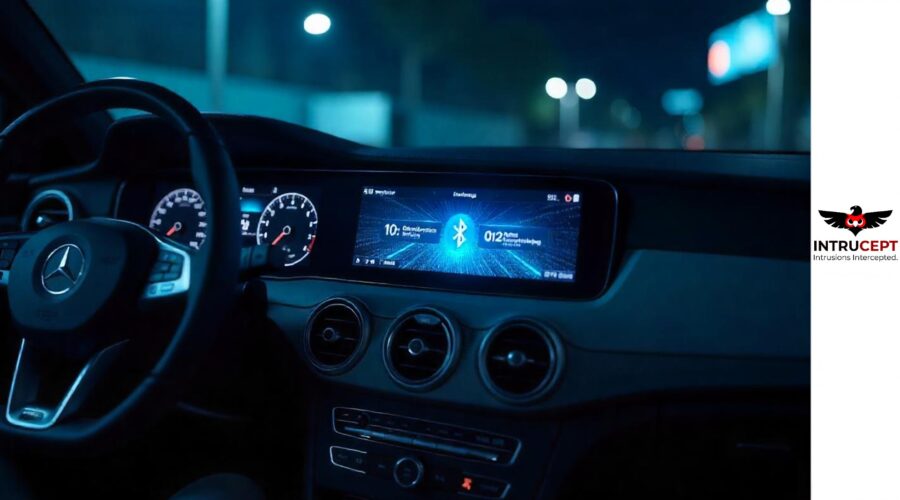
Researchers discovered critical Bluetooth flaws, called PerfektBlue, in the OpenSynergy BlueSDK stack used in millions of vehicles. These allow attackers nearby to remotely run malicious code through the infotainment system, potentially accessing GPS, audio and even vehicle controls depending on the car’s design.
Cars from brands like Mercedes-Benz, Volkswagen and Skoda are affected. While patches were released, it is urged to update the systems and stay cautious during Bluetooth pairing to stay protected.
| Vulnerability Name | CVE ID | Product Affected | Severity |
| Use-After-Free in AVRCP | CVE-2024-45434 | Open Synergy BlueSDK (Bluetooth AVRCP service_ | 8.0 |
| RFCOMM Improper Function Termination | CVE-2024-45433 | OpenSynergy BlueSDK (Bluetooth RFCOMM protocol) | 5.7 |
| RFCOMM Parameter Misuse | CVE-2024-45432 | OpenSynergy BlueSDK (Bluetooth RFCOMM protocol) | 5.7 |
| L2CAP Remote CID Validation Flaw | CVE-2024-45431 | OpenSynergy BlueSDK (Bluetooth L2CAP layer) | 3.5 |
Technical Summary
A set of vulnerabilities has been identified in the Bluetooth stack of infotainment systems, affecting core protocols like AVRCP, L2CAP, and RFCOMM. These issues stem from improper memory handling, incorrect parameter usage and flawed validation logic. While some may only cause system instability or crashes, they can be combined in a coordinated attack to bypass defenses, disrupt communication or potentially execute code remotely. Overall, they expose critical weaknesses that could be exploited to compromise the system through crafted Bluetooth traffic.
| CVE ID | System Affected | Vulnerability Details | Impact |
| CVE-2024-45434 | Vehicles using Open Synergy Blue SDK, including Mercedes-Benz, Volkswagen, Skoda and undisclosed OEM. | This vulnerability allows attackers to exploit free memory in the AVRCP service. By sending crafted Bluetooth commands, they can trigger a use-after-free condition, potentially leading to crashes or remote code execution inside the infotainment system. It can be part of a larger attack chain to take over the system. | May allow attackers to run remote code on the infotainment system. |
| CVE-2024-45433 | Automotive systems running Blue SDK’s RFCOMM protocol implementation. | Due to faulty logic in RFCOMM, certain functions may not exist properly. This can cause the system to behave unpredictably, giving attackers a chance to manipulate control flow or trigger crashes. It can be used to stabilize or advance remote attacks on the Bluetooth stack. | May cause system crash or help in running further malicious actions. |
| CVE-2024-45432 | Vehicles using Open Synergy Blue SDK with Bluetooth RFCOMM services. | This issue involves functions in the RFCOMM protocol being called with wrong parameters. Attackers can exploit this to introduce unexpected behavior or weaken Bluetooth processing. On its own, it may cause a crash, but as part of an exploit chain, it helps attackers gain deeper access. | Can create logic errors and make the system unstable. |
| CVE-2024-45431 | Infotainment systems in vehicles using Open Synergy Blue SDK Bluetooth stack. | This flaw stems from incorrect validation of channel IDs in the L2CAP layer. Attackers can send malformed Bluetooth packets that bypass checks, possibly disrupting communication or preparing the system for further exploitation. Though low in severity alone, it can support chained attacks. | Could help attackers bypass checks |
Remediation:
To stay protected from the PerfektBlue vulnerabilities, users should update with the available latest patches provided by the manufacturer ensure once their vehicle’s software is fully updated.
Here are some best practices below you can follow
Conclusion:
The PerfektBlue flaws show that even car Bluetooth systems can be a way for hackers to attack. If not fixed, these issues can let attackers take control of your car’s infotainment features and maybe more. Timely patching and adopting secure Bluetooth practices are essential to minimize exposure. As vehicles grow increasingly connected, securing their wireless interfaces becomes crucial to maintaining overall system safety and privacy.
References: